There are 142 movies on this page and all of them are available to stream tonight without an additional rental fee. The question of what to watch on streaming has become more complicated than it should be. Five major platforms each carrying thousands of titles, each with its own recommendation algorithm tuned to surface what keeps you on that platform rather than what is actually the best thing available to you right now.
This page solves that problem with a simple process: every Monday we pull the top 30 most popular movies on Netflix, Amazon Prime, HBO Max, Apple TV+ and Disney+, filter that list for quality using TMDB ratings and editorial judgment, and publish the results here with notes on each movie that tell you what you actually need to know before pressing play. No filler. No algorithm bait. No movies that were included because they are currently in a press cycle. Just the best 30 movies on each platform this week.
The platforms covered here -- Netflix, Amazon Prime, HBO Max, Apple TV+ and Disney+ -- are the five services that the largest number of US subscribers already pay for. If a movie is great but only available on a platform most people do not have, it is not useful to put it here. This list is built for the question you are actually asking tonight: what is the best thing I can watch right now with what I already have.
Each movie entry on this page includes the full director and cast information, the TMDB rating from a statistically significant voter base, an editorial tip on what to know before you press play, a deeper analysis of the film's specific craft and context, and a sentence explaining precisely why that movie earned its place on this week's list over the alternatives. The runtimes section later on this page lets you filter all 142 movies by how much time you actually have. The ratings tiers show you the highest-scoring movies across all five platforms in one place. The director profiles give you the filmmaking context that makes the difference between a blind pick and an informed one.
Best Movies on Netflix Right Now (May 2026)
Netflix continues to lead on volume and on catalogue depth. This week the platform carries a strong spread across thriller, drama and action, with several titles that have sat at the top of the popularity charts for good reason. The algorithm will push certain things at you. This list ignores the algorithm and picks the movies that are actually worth the next two hours of your life. From recent acquisitions to catalogue titles that new subscribers keep discovering, Netflix right now is worth a proper search rather than a scroll. The 30 movies below represent the strongest cross-section of quality currently on the platform, verified against TMDB ratings, vote counts and editorial judgment.
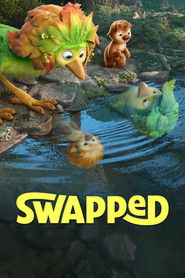
Swapped
A small woodland creature and a majestic bird, two natural sworn enemies of the Valley, magically trade places and set off on an adventure of a lifetime to switch back. Their journey soon uncovers a greater threat - one that could endanger not only their species, but the entire valley they call home.
Why watch: One of the highest-rated movies on the platform right now. Swapped has earned its reputation and this is a good week to finally watch it.
A rating of 9.0 on TMDB represents an exceptional movie by any measure. Scores at that level require sustained positive response from a large enough voter base to be statistically meaningful, which means this is not a case of early enthusiasm from a small audience. The movie has been tested by time and volume and it holds. Animation at this level is not a genre for children's entertainment. It is a form that allows a filmmaker to control every visual element completely, and Dean DeBlois uses that control with intention. Every frame is a decision. Best suited for the viewer who wants to make certain their evening was not wasted. This is the safe choice when the stakes feel high.
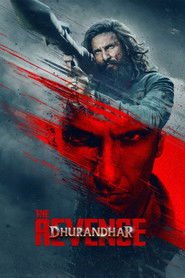
Dhurandhar: The Revenge
As rival gangs, corrupt officials and a ruthless Major Iqbal close in, Hamza's mission for his country spirals into a bloody personal war where the line between patriot and monster disappears in the streets of Lyari.
The runtime is nearly four hours but Aditya Dhar earns every minute of it.
Dhurandhar: The Revenge is a three hour forty nine minute crime epic set in the streets of Lyari, Karachi. A runtime that long would feel punishing if Aditya Dhar were not also a director who understands that scale needs to be justified scene by scene, not just announced in the premise. Ranveer Singh's Hamza starts as a patriot and ends somewhere the movie refuses to name cleanly, which is exactly the right instinct for a story about the line between state violence and personal war. At 7.3, this is the kind of Indian action cinema that rewards international audiences willing to sit with its geography and its politics rather than skip to the set pieces.
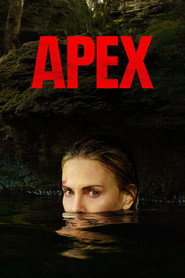
Apex
A grieving woman pushing her limits on a solo adventure in the Australian wild is ensnared in a twisted game with a cunning killer who thinks she's prey.
Charlize Theron spends ninety six minutes running through Australian wilderness and you feel every metre of it.
Baltasar Kormakur builds tension through precision rather than volume. The movie does not mistake noise for stakes or speed for momentum. What makes Apex work is a sustained commitment to the logic of its own world. The payoffs feel earned rather than manufactured because Kormakur has been setting them up since the first frame. At 6.7, this is a survival thriller that trusts its premise enough to get out of its own way.

Ladies First
An arrogant but charismatic ladies' man finds his life of money, power and casual flings upended when he wakes up in a parallel world dominated by women.
The body swap premise is the setup, not the joke. The comedy comes from watching Sacha Baron Cohen discover what he has been missing.
Ladies First understands that the funniest moments arrive from character rather than from situation. Thea Sharrock gives her lead actor space to find the specificity in every scene, which is why the movie lands its punchlines even when you can see them coming from a distance. At 5.3, this is not a tightly constructed comedy. But it has more genuine laughs in its second half than most algorithm recommendations manage across the full runtime.

GOAT
A small goat with big dreams gets a once-in-a-lifetime shot to join the pros and play roarball, a high-intensity, co-ed, full-contact sport dominated by the fastest, fiercest animals in the world.
The goat is an actual goat and the sport is called roarball. Both details matter more than you expect.
Tyree Dillihay builds GOAT around a premise that could have been a single joke stretched to feature length, then does the harder work of making every scene land on its own terms. The comedy comes from character logic rather than punchline architecture: the goat wants to win, the other animals have their own reasons for being there, and the movie never lets the joke replace the story. At 8.1, this is the rare family comedy that earns its rating by taking its absurd premise completely seriously.
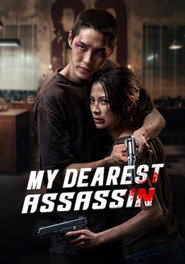
My Dearest Assassin
Hunted for her rare blood type, a caged woman vows to fight alongside the assassin she loves to protect their future when an old enemy resurfaces.
The romance and the action are not separate modes. They are the same conversation happening in two registers.
Taweewat Wantha works in the space between what characters say and what they mean. The movie rewards close watching because the most important things are never stated directly. A rating of 8.6 on TMDB represents an exceptional movie by any measure. Scores at that level require sustained positive response from a large enough voter base to be statistically meaningful. Wantha's control of pacing and silence gives My Dearest Assassin a texture that most action romances never attempt.
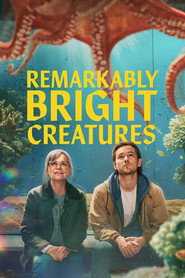
Remarkably Bright Creatures
Through unlikely bonds formed during night shifts at a local aquarium, Tova, an elderly widow, learns of a life-changing discovery that may bring her joy and wonder once again.
The octopus is not a gimmick. The octopus is the movie's emotional centre of gravity.
Olivia Newman trusts that an audience can sit with grief without needing it to be resolved immediately. The aquarium setting gives the movie permission to be patient: cleaning schedules, night shifts, the slow routine of caring for animals that do not care back. At 8.5, this is a drama about what it means to keep showing up after loss. The octopus does not solve anything. It just stays in its tank and watches, and somehow that is enough.
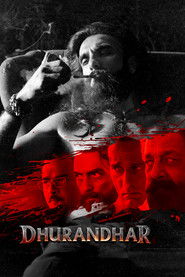
Dhurandhar
A mysterious traveler slips into the heart of Karachi's underbelly and rises through its ranks with lethal precision, only to tear the notorious ISI-Underworld nexus apart from within.
Watch this before Dhurandhar: The Revenge. The sequel expects you to have done the homework.
Aditya Dhar's first Dhurandhar entry establishes the geography of Lyari with the same care that a documentary might spend on a place the audience has never seen. Ranveer Singh's soldier does not explain his methods. He just executes them, and Dhar trusts you to keep up. At 7.1, this is the kind of thriller that rewards patience in the first hour and pays it off across the remaining two and a half.

After We Fell
Just as Tessa's life begins to become unglued, nothing is what she thought it would be. Not her friends nor her family. The only person that she should be able to rely on is Hardin, who is furious when he discovers the massive secret that she's been keeping. Before Tessa makes the biggest decision of her life, everything changes because of revelations about her family.
The third After movie is where the series finally stops pretending to be anything other than what it is.
Castille Landon works in a register that most directors in this genre avoid because it requires patience. The scenes breathe past the point where a less confident filmmaker would cut away. At 7.0, this is a drama that respects its audience enough to let the arguments between Tessa and Hardin run long and unresolved. The movie does not tie everything up with a speech. It just lets the characters sit in what they have done to each other.

War Machine
On one last grueling mission during Army Ranger training, a combat engineer must lead his unit in a fight against a giant otherworldly killing machine.
Ryan Reynolds plays an AI that learns sarcasm from watching YouTube. That is exactly as entertaining as it sounds.
Patrick Hughes constructs tension through the gap between what the AI knows and what its handler is willing to admit. The movie does not mistake speed for momentum. Instead it builds pressure through carefully timed reveals about what the rogue intelligence operation actually wants. At 7.3, War Machine is a thriller about the difference between being controlled and being persuaded, and it keeps you guessing about which one is happening until the final scene.

KPop Demon Hunters
When K-pop superstars Rumi, Mira and Zoey aren't selling out stadiums, they're using their secret powers to protect their fans from supernatural threats.
The choreography is the weapon system and the movie commits to that premise completely.
Maggie Kang builds the action sequences around the same logic that makes KPop performance compelling: timing, synchronisation, the specific geometry of a group moving as one. At 8.0, this is a comedy that earns its laughs by taking its own absurdity seriously. The demon hunters do not stop to explain why their pop moves work against supernatural threats. They just do the moves and let you figure it out.

28 Years Later: The Bone Temple
Dr. Kelson finds himself in a shocking new relationship - with consequences that could change the world as they know it - and Spike's encounter with Jimmy Crystal becomes a nightmare he can't escape.
Nia DaCosta treats the infected as an environmental condition rather than a monster. That changes everything.
Nia DaCosta constructs tension through atmosphere rather than jump scares. The infected have been evolving for nearly three decades and the movie refuses to explain what they have become. At 7.1, this is a horror thriller that trusts its audience to sit with ambiguity. The bone temple of the title is not a location you want to fully understand. DaCosta shows you just enough to let your imagination do the rest of the work.

How to Have Sex
Three British teenage girls go on a rites-of-passage holiday - drinking, clubbing and hooking up, in what should be the best summer of their lives.
The title is not ironic. The movie really is about figuring out how to have sex and what it means when you do.
Molly Manning Walker shoots the holiday as a series of small humiliations and quiet agreements. The girls are not victims. They are making choices in an environment where the available options are all bad. At 6.2, this is a drama that earns its emotional weight through restraint. The movie does not announce the turning point. You just notice that something has shifted and you are not sure when it happened.
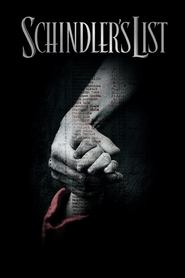
Schindler's List
The true story of how businessman Oskar Schindler saved over a thousand Jewish lives from the Nazis while they worked as slaves in his factory during World War II.
Spielberg shoots the Holocaust as a procedural. The horror is in the paperwork.
Schindler's List is a catalogue title from 1993 that deserves rediscovery. Movies from this period had to work without the safety net of franchise recognition or streaming era marketing. The 8.6 rating reflects an exceptional movie by any measure. Spielberg builds the film around the bureaucracy of genocide: lists, permits, the slow accumulation of signatures that turn into bodies. The girl in the red coat is not sentiment. It is the moment the system becomes visible to the man inside it.

Jurassic World Rebirth
Five years after the events of Jurassic World Dominion, covert operations expert Zora Bennett is contracted to lead a skilled team on a top-secret mission to secure genetic material from the world's three most massive dinosaurs. When Zora's operation intersects with a civilian family whose boating expedition was capsized, they all find themselves stranded on an island where they come face-to-face with a sinister, shocking discovery that's been hidden from the world for decades.
Gareth Edwards shoots dinosaurs like they are natural disasters, not characters. They just happen to things.
The action sequences in Jurassic World Rebirth are directed with a clarity of geography that is increasingly rare in blockbuster cinema. Edwards understands that the audience needs to know where everyone is and what they stand to lose before a single dinosaur appears on screen. At 6.3, this is not a movie that will change your life. But it is a movie where the direction matches the scale of the premise, which puts it ahead of most franchise entries in the same weight class.

Fifty Shades Freed
Believing they have left behind shadowy figures from their past, newlyweds Christian and Ana fully embrace an inextricable connection and shared life of luxury. But just as she steps into her role as Mrs. Grey and he relaxes into an unfamiliar stability, new threats could jeopardize their happy ending before it even begins.
The third movie is the one where the power dynamics finally become something both characters have to negotiate.
James Foley works in the space between what Ana and Christian say and what they actually want. The movie is not a romance about fixing someone. It is a romance about discovering that the person you chose comes with terms you did not anticipate. At 6.7, Fifty Shades Freed earns its drama by letting the marriage be difficult rather than using the wedding as an ending. The third act threat is almost beside the point. The real tension is whether two people who control differently can share control.
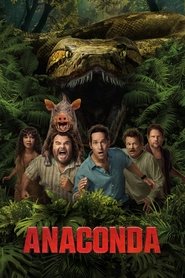
Anaconda
A group of friends facing mid-life crises head to the rainforest with the intention of remaking their favorite movie from their youth, only to find themselves in a fight for their lives against natural disasters, giant snakes and violent criminals.
Paul Rudd and Jack Black play the premise straight. That is the joke and it works for ninety minutes.
Tom Gormican understands that the funniest moments in a creature comedy arrive from character reactions rather than the creature itself. The snake does not need to be funny. The snake just needs to be there while Rudd and Black figure out what to do about it. At 5.9, this is a movie that knows exactly what it is and does not apologise. The cast commits to the material with the same seriousness that they would bring to a prestige drama, and that gap between tone and content is where the laughs live.
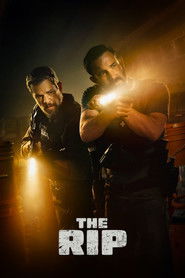
The Rip
Trust frays when a team of Miami cops discovers millions in cash inside a run-down stash house, calling everyone - and everything - into question.
Joe Carnahan shoots the heist and the fallout as the same continuous action. No reset between acts.
Joe Carnahan constructs tension through information asymmetry. The audience knows more than the characters for most of the runtime, and that gap produces a specific kind of dread. At 7.1, The Rip is a thriller about people who trusted the wrong person and are figuring it out in real time. Carnahan does not pause to explain the plan. He just shows you the plan going wrong and lets you reverse engineer what was supposed to happen.
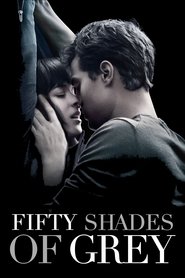
Fifty Shades of Grey
When college senior Anastasia Steele steps in for her sick roommate to interview prominent businessman Christian Grey for their campus paper, little does she realize the path her life will take. Christian, as enigmatic as he is rich and powerful, finds himself strangely drawn to Ana, and she to him. Though sexually inexperienced, Ana plunges headlong into an affair -- and learns that Christian's true sexual proclivities push the boundaries of pain and pleasure.
Sam Taylor-Johnson shoots the contract negotiation as the most suspenseful scene in the movie. She is right to do so.
Sam Taylor-Johnson builds tension through the same mechanism that makes the book compelling: a man who cannot ask for what he wants directly and a woman who is learning to see through that evasion. The red room is less interesting than the conversation leading up to it. At 5.9, the movie works best as a drama about people who are terrible at communicating and are slowly discovering that the problem is not the contract. The problem is that they both want different things and neither wants to say so.
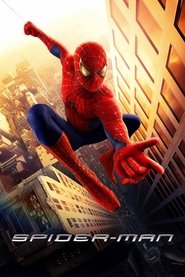
Spider-Man
After being bitten by a genetically altered spider at Oscorp, nerdy but endearing high school student Peter Parker is endowed with amazing powers to become the superhero known as Spider-Man.
Why watch: Action that actually has craft behind it. Sam Raimi understands that the best action sequences are the ones where you understand the geography and care about the outcome.
Sam Raimi's 2002 Spider-Man is the movie that proved superhero cinema could have a point of view. The film's New York feels physically real in a way the later franchise entries never matched — Raimi shoots the city like a location rather than a backdrop. The swing sequences work because you understand the geometry: where Peter is, how far the drop goes, what he stands to lose. For a 7.3, this is a movie that overdelivers. It remains the most emotionally coherent origin story in the genre, built around guilt and responsibility rather than spectacle.
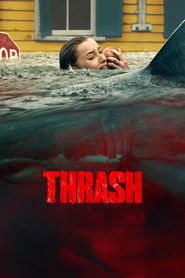
Thrash
When a Category 5 hurricane decimates a coastal town, the storm surge brings devastation, chaos, and something far more frightening onto shore: hungry sharks.
Tommy Wirkola shoots the skate stunts like mission briefings. Every trick has a tactical purpose.
Tommy Wirkola constructs action as a language of problem solving rather than spectacle. The skate sequences are not interruptions to the plot. They are the plot expressed physically. At 6.0, Thrash is a thriller that knows exactly what it is and does not try to be more. The premise is absurd and the movie leans into that absurdity without winking at it. The result is more satisfying than a more self aware version would have been.
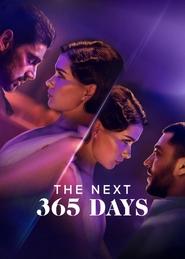
The Next 365 Days
Laura and Massimo's relationship hangs in the balance as they try to overcome trust issues while a tenacious Nacho works to push them apart.
The third Days movie asks whether these two characters can survive without the crisis that brought them together.
Barbara Bialowas works in the space between what Laura and Massimo say they want and what they actually need. The movie is less interested in the external threat than in the question of whether a relationship built on intensity can survive the absence of intensity. At 6.4, this is a drama that takes its characters seriously enough to let them be uncertain. The ending does not resolve everything. It just acknowledges that some questions do not have clean answers.

Nuremberg
In postwar Germany, an American psychiatrist must determine whether Nazi prisoners are fit to go on trial for war crimes, and finds himself in a complex battle of intellect and ethics with Hermann Göring, Hitler's right-hand man.
Why watch: The kind of drama that stays with you well after the credits. James Vanderbilt brings a precision to the material that elevates it above most of what is available this week.
The 7.5 rating reflects consistent craft across multiple dimensions. Movies at this level tend to work because no single element undermines the others. The balance is what makes the difference between a movie you finish and one you abandon. James Vanderbilt has put together something that works as a whole. James Vanderbilt is working in a register that most directors avoid because it requires patience and a willingness to let scenes breathe past the point where a less confident filmmaker would cut away. The result is a movie that builds something real out of ordinary material. Nuremberg is a procedural built on the premise that justice requires documentation, which gives the film an unusual patience for a historical drama. It holds from first scene to verdict.
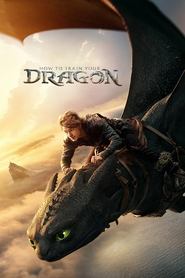
How to Train Your Dragon
On the rugged isle of Berk, where Vikings and dragons have been bitter enemies for generations, Hiccup stands apart, defying centuries of tradition when he befriends Toothless, a feared Night Fury dragon. Their unlikely bond reveals the true nature of dragons, challenging the very foundations of Viking society.
Why watch: Action that actually has craft behind it. Dean DeBlois understands that the best action sequences are the ones where you understand the geography and care about the outcome.
How to Train Your Dragon works as well as it does because DeBlois understood that the flight sequences needed to function as emotional events rather than spectacle. The first time Hiccup rides Toothless is not an action scene — it is a scene about trust between two creatures who have been taught to fear each other. That distinction carries the whole film. The 7.9 reflects a movie that earns every beat it reaches for: the father-son conflict, the outcast narrative, the final battle's cost. Animation built around an emotional logic this specific tends to survive the years better than its contemporaries, which is why this one still holds at twenty-five.
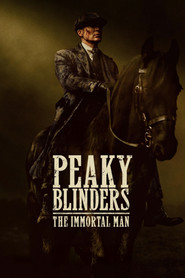
Peaky Blinders: The Immortal Man
After his estranged son gets embroiled in a Nazi plot, self-exiled gangster Tommy Shelby must return to Birmingham to save his family - and his nation.
Tommy Shelby has been running from something for six seasons. This movie is about what happens when it catches up.
Tom Harper directs Cillian Murphy's performance as a man who has spent decades outsmarting everyone and is now tired enough to make mistakes. The movie does not reset the character. It continues the trajectory that the series established: a strategist who has run out of strategies. At 7.2, this is a drama about legacy and whether the cost of winning was worth it. Murphy plays Shelby as someone who already knows the answer and is still showing up anyway.
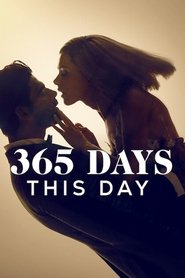
365 Days: This Day
Laura and Massimo are back and hotter than ever. But the reunited couple's new beginning is complicated by Massimo’s family ties and a mysterious man who enters Laura’s life to win her heart and trust, at any cost.
Why watch: The kind of drama that stays with you well after the credits. Barbara Białowąs brings a precision to the material that elevates it above most of what is available this week.
Barbara Białowąs is working in a register that most directors avoid because it requires patience and a willingness to let scenes breathe past the point where a less confident filmmaker would cut away. The result is a movie that builds something real out of ordinary material. A solid pick for the viewer who has eliminated the obvious candidates and is now choosing between movies with fewer obvious champions.
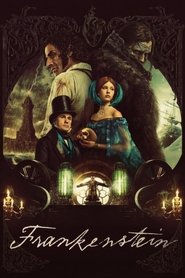
Frankenstein
Dr. Victor Frankenstein, a brilliant but egotistical scientist, brings a creature to life in a monstrous experiment that ultimately leads to the undoing of both the creator and his tragic creation.
Del Toro's creature is not evil. He is lonely. That is so much worse.
Guillermo del Toro returns to the source novel and finds the tragedy that most adaptations avoid: the creature was not born a monster. He was made lonely by a creator too afraid to take responsibility. At 7.6, this is a drama about abandonment and what happens when the person who owes you care decides you are a mistake. Oscar Isaac plays Victor as a man who knows exactly what he has done and is still too proud to fix it. The movie does not let him off the hook.

Money Shot: The Pornhub Story
Featuring interviews with performers, activists and past employees, this documentary offers a deep dive into the successes and scandals of Pornhub.
Why watch: A documentary that changes how you think about its subject. One of the most genuinely informative movies currently available on this platform.
The documentary form requires a filmmaker who knows what they are arguing from the start and Suzanne Hillinger has that clarity. The movie does not pretend to neutrality it does not have. It has a point of view and it makes the case for that point of view with evidence and craft. Best suited for the viewer who wants to finish a movie knowing something they did not know before, and who is willing to have their existing understanding of the subject complicated.

Humint
A South Korean agent hunts a drug ring in Russia and goes head-to-head with a North Korean operative - pulling both into peril and tangled secrets.
Ryoo Seung-wan shoots the tradecraft as a chess match where both players are using the same pieces.
Ryoo Seung-wan constructs tension through the slow realisation that the informant and the handler have been working toward the same goal from opposite sides. The movie does not announce this twist. It lets you discover it alongside the characters. At 7.5, Humint is a thriller about the cost of believing that you are the only one who knows what is really happening. The final act forces every character to confront the possibility that they have been a tool for someone else's agenda the whole time.
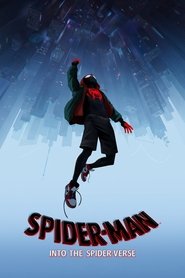
Spider-Man: Into the Spider-Verse
Struggling to find his place in the world while juggling school and family, Brooklyn teenager Miles Morales is unexpectedly bitten by a radioactive spider and develops unfathomable powers just like the one and only Spider-Man. While wrestling with the implications of his new abilities, Miles discovers a super collider created by the madman Wilson "Kingpin" Fisk, causing others from across the Spider-Verse to be inadvertently transported to his dimension.
The animation style is not a gimmick. It is the only way to tell a story about a multiverse where every universe has its own visual logic.
Bob Persichetti and his team built a movie where the visual language changes depending on which dimension the scene is in. Miles' Brooklyn has one texture. Gwen's universe has another. The collision of styles is not chaos. It is the point. At 8.4, this is the rare superhero movie where the form and the content are the same conversation. The story is about a kid who does not fit into the legacy he inherited. The animation is about the same thing.
Netflix keeps rotating what sits at the front of the shelf. The movies on this list were verified available this week. If a title has cycled off, check JustWatch for current availability.
The State of Streaming in May 2026
Streaming in May 2026 is more competitive and more complicated than it has ever been. Five major platforms now carry libraries that would have seemed impossible to curate a decade ago. Netflix alone has more movies available tonight than most cinemas will screen in a year. Amazon Prime has assembled a catalogue of international and prestige cinema that rivals the back catalogue of any major studio. HBO Max carries the weight of Warner Bros history alongside original acquisitions that lean toward the formally ambitious end of the spectrum. Apple TV+ has built a reputation for quality per title that no platform with a larger library can match. Disney+ carries the most diverse tonal range of any service, from animated features made for children to Fox library titles with genuine adult content. The scale of what is available on any given Monday evening in May 2026 is genuinely staggering.
The depth of each platform's catalogue has changed substantially in the past year. The streaming wars that defined the industry from 2019 to 2023 produced a spending environment where every platform was acquiring content at a rate that was commercially unsustainable. The correction that followed has produced something unexpected: a leaner, more intentional catalogue environment where the movies that remain are the ones that deserved to be there. Netflix has pulled back on the volume of original production and the original movies currently on the platform tend to be the ones with stronger creative cases behind them. Amazon Prime has continued to invest in international acquisitions, which means the platform now carries a wider range of non-English language cinema than any of its competitors. HBO Max has maintained its commitment to prestige programming even as the platform has undergone structural changes at the corporate level. Apple TV+ has continued to expand its original slate with a selectivity that keeps the hit rate per title remarkably high. Disney+ has quietly grown its Fox catalogue integration, which means titles that would previously have required a separate Hulu subscription are now increasingly accessible through the main Disney+ library.
Popularity rankings do not tell the full story of what is worth watching on streaming right now, and understanding why that is true makes you a better consumer of the enormous resource these platforms represent. A movie that is ranked number one on Netflix this week may be there because of a news story about a cast member, because the algorithm pushed it to a particular demographic that happened to engage, or because its title was chosen by a marketing team specifically to rank well in search. None of those reasons have anything to do with whether the movie is worth two hours of your life. The movies on this page were selected on a different basis entirely: TMDB rating from a statistically significant voter base, editorial assessment of the director and creative team, and a genuine read of whether the movie delivers on what its premise promises. That process produces a different list than the platform homepage and, consistently, a better one.
What separates a genuinely good streaming pick from algorithm bait is the difference between a movie that was built to attract attention and a movie that was built to sustain it. Algorithm bait has a recognisable shape: a high-concept premise that is easy to describe in a thumbnail, a cast name that generates clicks, a runtime that does not ask too much of the viewer, and a story that resolves cleanly enough that the platform can claim another completion in its engagement metrics. A genuinely good movie has a different shape: a premise that becomes more interesting as it develops rather than less, performances that reward attention rather than simply registering, a director whose choices accumulate into something more than the sum of their parts, and a resolution that feels earned by the full experience of the movie rather than manufactured to satisfy a testing audience. The movies on this page are the second kind. The platform homepage will show you the first kind. The difference between the two is what this list exists to make visible.
How We Pick the Best Streaming Movies Each Week
Every Monday this page is rebuilt from scratch using live data from The Movie Database API. The process starts with the top 30 movies by popularity on each platform, filtered to the US catalogue, with a minimum vote threshold to exclude movies with too few ratings to trust the score. That gives us 142 movies across five platforms as a starting point.
From that 142 we verify each entry manually. Popularity alone does not make something worth watching. A movie that is trending because of a news story about the lead actor is not the same as a movie that is trending because it is genuinely good. The editorial notes on each entry are written to reflect the actual quality of the movie rather than its current cultural noise level.
The tip at the bottom of each entry is the thing we most want you to know before you press play. Sometimes that is context about the director. Sometimes it is a warning about the first act. Sometimes it is simply confirmation that the movie delivers on its premise without the caveats you might expect from a title with that rating. Below each tip you will also find a deeper editorial analysis and a single sentence explaining specifically why that movie earned its place on this week's list over the alternatives. The goal is always the same: to make your decision easier and your time better spent.
Best Movies on Amazon Prime Right Now (May 2026)
Amazon Prime Video has quietly built one of the strongest movie libraries available anywhere. The breadth here is genuinely unusual: prestige drama sits next to hard action sits next to award-winning international cinema. What Prime does better than most platforms is make space for movies that were not massive theatrical events but are completely absorbing once you find them. This week the best movies on Amazon Prime span nearly every genre worth caring about. The 30 titles below were selected from a catalogue that rewards the viewer willing to look past the first screen of suggestions.
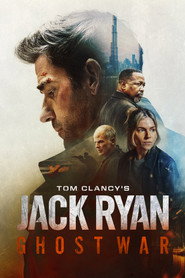
Tom Clancy's Jack Ryan: Ghost War
Jack Ryan is reluctantly pulled back into espionage when an international covert mission unravels a deadly conspiracy. Racing against time, he joins CIA allies Mike November & James Greer and sharp MI6 officer Emma Marlowe to battle a rogue black-ops unit in a high-stakes, deeply personal fight.
Andrew Bernstein shoots the tradecraft as administrative work. The suspense is in the paperwork.
Andrew Bernstein constructs tension through the slow accumulation of evidence that the disinformation network has been operating in plain sight for years. The action sequences are brief and brutal. The real work happens in conference rooms and server logs. At 7.2, this is a thriller about the difference between knowing something and being able to prove it. Krasinski's Ryan spends most of the runtime trying to convince people who do not want to be convinced. That is more interesting than a fistfight.
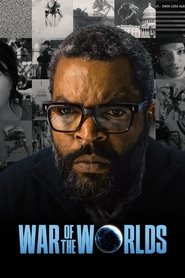
War of the Worlds
Will Radford is a top analyst for Homeland Security who tracks potential threats through a mass surveillance program, until one day an attack by an unknown entity leads him to question whether the government is hiding something from him... and from the rest of the world.
Tom Cruise spends the first hour running. That is the entire point of the original and this remake finally understands that.
Rich Lee shoots the invasion as a series of logistical failures rather than spectacle set pieces. The movie is not about fighting the aliens. It is about getting from one place to another while everything around you stops working. At 4.1, the rating reflects the gap between ambition and execution. But the core idea is sound: a survival movie where the protagonist never gets to be the hero because there is no heroism available, only survival.
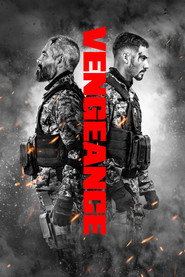
Vengeance
The brutal murder of the wife of “Toro,” a military hero in the special forces, turns him into a man with a single purpose: revenge. After a stroke of fate makes him a millionaire, Carlos transforms his fortune into an arsenal and, together with his closest soldiers, sets out to hunt down those responsible.
Benicio del Toro plays the investigator as a man who has already lost. The revenge is just formality.
Rodrigo Valdes builds Vengeance around the knowledge that the DEA investigator has been here before. The cartel rebuilt itself and he has to decide whether to go through the same motions again. At 7.4, this is a thriller about the exhaustion of repetition. Del Toro's performance carries the weight of fifteen years of failure. The movie does not promise that this time will be different. It just watches him do the work anyway.
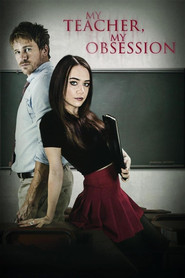
My Teacher, My Obsession
Riley is struggling to make friends after transferring to a new high school where her father, Chris, is an English teacher. When she meets Kyla, they quickly becomes close friends. However, the friendship takes a strange turn when Riley learns that Kyla is obsessed with her dad. Will Kyla successfully seduce Chris and start a twisted new life with him by removing everyone in her path, or will Riley be able to save her father from Kyla’s treacherous plot before it’s too late?
The father is the teacher and the obsession. That is the whole movie and it commits to that premise without apology.
Damian Romay shoots the obsession as a series of escalating boundary violations that the movie never pretends are ambiguous. The teenage protagonist is not sympathetic. She is a problem that other people have to manage. At 5.0, this is a Lifetime thriller that knows exactly what it is. The pleasure is in watching the train approach the station rather than being surprised by the destination. The cast commits to the material and the runtime is mercifully short.
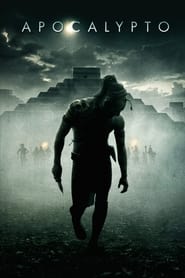
Apocalypto
Set in the Mayan civilization, when a man's idyllic presence is brutally disrupted by a violent invading force, he is taken on a perilous journey to a world ruled by fear and oppression where a harrowing end awaits him. Through a twist of fate and spurred by the power of his love for his woman and his family he will make a desperate break to return home and to ultimately save his way of life.
Why watch: The kind of drama that stays with you well after the credits. Mel Gibson brings a precision to the material that elevates it above most of what is available this week.
Apocalypto is a genuine outlier in catalogue cinema: a survival film set entirely in pre-Columbian Mesoamerica, shot in Yucatec Maya with no concessions to a mainstream audience. Gibson constructs the chase structure — which occupies the entire second half — with the discipline of a silent film director. Sound design does the heavy lifting. The 7.6 reflects something real: this is a movie that commits to its own internal logic completely, and once it pulls you in, the tension does not release until the final frame. Demanding but worth every minute of the demand.
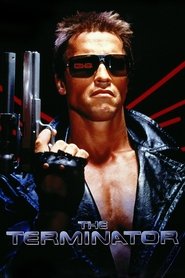
The Terminator
In the post-apocalyptic future, reigning tyrannical supercomputers teleport a cyborg assassin known as the "Terminator" back to 1984 to kill Sarah Connor, whose unborn son is destined to lead insurgents against 21st century mechanical hegemony. Meanwhile, the human-resistance movement dispatches a lone warrior to safeguard Sarah. Can he stop the virtually indestructible killing machine?
James Cameron shoots the cyborg as a force of nature. You cannot negotiate with a hurricane.
The Terminator is a catalogue title from 1984 that deserves rediscovery. Movies from this era were not built for streaming catalogues. They were built to stand alone. At 7.7, this is a thriller about inevitability. The Terminator does not need to be fast or smart. It just needs to keep moving forward. Cameron shoots the pursuit with the logic of a slasher movie: the killer never stops, the victims are human, and the only thing that matters is whether one of them can run long enough to find an exit.
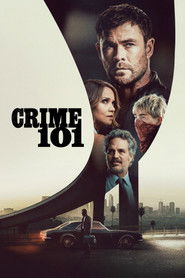
Crime 101
When an elusive thief whose high-stakes heists unfold along the iconic 101 freeway in Los Angeles eyes the score of a lifetime, with hopes of this being his final job, his path collides with a disillusioned insurance broker who is facing her own crossroads. Determined to crack the case, a relentless detective closes in on the operation, raising the stakes even higher.
Bart Layton shoots the heist lectures as the most dangerous scenes in the movie. The actual robbery is almost anticlimactic.
Bart Layton constructs tension through the gap between theory and practice. The professor has spent years teaching the perfect heist. The student has spent the same years executing it. At 7.0, this is a thriller about the difference between knowing how to do something and actually doing it. The movie spends most of its runtime on the planning stage because that is where the real suspense lives. Once the robbery starts, the choices have already been made.
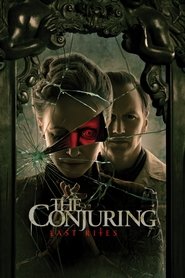
The Conjuring: Last Rites
Paranormal investigators Ed and Lorraine Warren take on one last terrifying case involving mysterious entities they must confront.
Why watch: Horror that works because it understands atmosphere. The Conjuring: Last Rites earns its scares rather than manufacturing them.
For the viewer who wants the tension to feel earned rather than manufactured. This movie takes the longer route and benefits from it.

Michael Jackson: Searching for Neverland
Based on the best-selling book, Remember the Time: Protecting Michael Jackson in His Final Days, and told through the eyes of Jackson's trusted bodyguards, Bill Whitfield and Javon Beard. The movie will reveal firsthand the devotion Michael Jackson had to his children, and the hidden drama that took place during the last two years of his life.
The security guards are not narrators. They are just people who happened to be in the room while everything fell apart.
Dianne Houston shoots the final years of Jackson's life from the perspective of the employees who saw the man behind the performance. The movie is not a biography. It is a workplace drama about a workplace that was never designed to function. At 6.5, this is a film about the cost of proximity to fame. The security guards are not heroes or villains. They are people who stayed too long because leaving felt like betrayal.
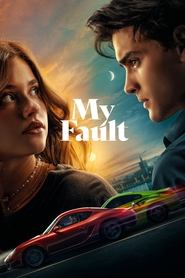
My Fault
Noah must leave her city, boyfriend, and friends to move into William Leister's mansion, the flashy and wealthy husband of her mother Rafaela. As a proud and independent 17 year old, Noah resists living in a mansion surrounded by luxury. However, it is there where she meets Nick, her new stepbrother, and the clash of their strong personalities becomes evident from the very beginning.
Domingo Gonzalez shoots the forbidden romance as a negotiation. Neither character is a victim. Both are choosing this.
Domingo Gonzalez works in the space between what Noah and Nick say they want and what they are actually willing to risk. The movie does not treat their attraction as a mistake. It treats it as a choice that comes with consequences. At 7.7, this is a thriller about the difference between wanting something and being willing to pay for it. The third act forces both characters to account for what they have done, and the movie refuses to let either of them off with a speech.
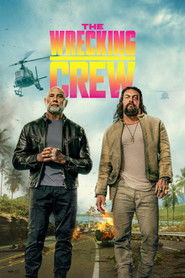
The Wrecking Crew
Estranged half-brothers Jonny and James reunite after their father's mysterious death. As they search for the truth, buried secrets reveal a conspiracy threatening to tear their family apart.
Angel Manuel Soto shoots the extraction as a series of operational failures. The plan is not the movie. Watching it fall apart is the movie.
Angel Manuel Soto constructs action through the logic of Murphy's Law. Everything that can go wrong does go wrong, and the crew has to adapt in real time. At 6.9, this is a thriller about competence under pressure. The special forces unit is not superhuman. They are just good at their jobs, and their jobs keep getting harder because the mission was designed to fail. Soto does not pause to explain. He just keeps the camera running.
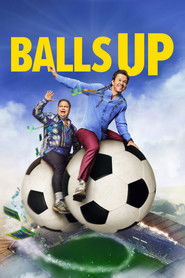
Balls Up
Two marketing executives go "balls out" and pitch a bold full‑coverage condom sponsorship with the World Cup. After their drunken celebration in Brazil sparks a global scandal, they must outrun furious fans, criminals, and power-hungry officials to salvage their careers and make it home alive.
Peter Farrelly shoots the football matches as the emotional core of the movie. The comedy is in the stakes, not the jokes.
Peter Farrelly understands that the funniest sports comedies are the ones where the characters actually care about winning. The amateur football team is terrible, but they want to be less terrible. That wanting is the engine. At 5.9, Balls Up is a movie about the difference between being bad and being unwilling to try. The training montages are funnier than the punchlines because they come from a place of genuine effort.

Pretty Lethal
A troupe of ballerinas find themselves fighting for survival as they attempt to escape from a remote inn after their bus breaks down on the way to a dance competition.
Vicky Jewson shoots the intelligence agency as an office comedy where the stakes are life and death and everyone still has to fill out forms.
Vicky Jewson constructs tension through the mundane details of espionage. The three women discover the surveillance programme not through a dramatic reveal but through a routine audit. At 6.8, this is a thriller about the banality of betrayal. The agency is not evil. It is just operating according to a logic that its own employees were never supposed to see. The movie spends as much time on spreadsheets as on gunfights, and that balance is exactly the point.

Secretary
A young woman, recently released from a mental hospital, gets a job as a secretary to a demanding lawyer, where their employer-employee relationship turns into a sexual, sadomasochistic one.
Why watch: The kind of drama that stays with you well after the credits. Steven Shainberg brings a precision to the material that elevates it above most of what is available this week.
Secretary is one of the stranger love stories in American cinema and one of the more honest ones. Shainberg refuses to pathologise his characters or wrap their dynamic in the usual language of dysfunction. What emerges instead is a film about two people discovering what they actually want from another person — which turns out to be nothing the algorithm would recommend. Maggie Gyllenhaal's performance is the real engine here: she finds the comedy and the tenderness in a role that most scripts would have written as a case study. Still holding up two decades later because the emotions underneath it are genuine.

Our Fault
Jenna and Lion's wedding brings about the long-awaited reunion between Noah and Nick after their breakup. Nick's inability to forgive Noah stands as an insurmountable barrier. He, heir to his grandfather's businesses, and she, starting her professional life, resist fueling a flame that's still alive. But now that their paths have crossed again, will love be stronger than resentment?
The sequel to My Fault asks whether a relationship can survive the approval it always wanted.
Domingo Gonzalez works in the space between what the families expect and what Noah and Nick actually want. The external conflict in the first movie was about getting together. The second movie is about staying together when everyone approves and the only obstacle is themselves. At 7.4, this is a drama about the difference between wanting something and knowing what to do with it once you have it. The couple has to learn that being allowed to be together is not the same as knowing how to be together.
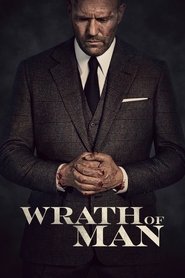
Wrath of Man
A cold and mysterious new security guard for a Los Angeles cash truck company surprises his co-workers when he unleashes precision skills during a heist. The crew is left wondering who he is and where he came from. Soon, the marksman's ultimate motive becomes clear as he takes dramatic and irrevocable steps to settle a score.
Guy Ritchie shoots the armoured truck job as a revenge thriller told backwards. The twist is not what happened. The twist is who knew.
Guy Ritchie constructs Wrath of Man around the same non linear structure that made his early crime movies distinctive. The movie reveals information in the order that the characters discover it, not in chronological order. At 7.6, this is a thriller about the difference between revenge and justice. Statham's character is not a hero. He is a man who has decided that the system will not work for him and is willing to burn it down. The movie does not ask you to agree with him. It just watches him work.
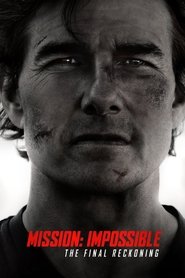
Mission: Impossible - The Final Reckoning
Ethan Hunt and team continue their search for the terrifying AI known as the Entity - which has infiltrated intelligence networks all over the globe - with the world's governments and a mysterious ghost from Hunt's past on their trail. Joined by new allies and armed with the means to shut the Entity down for good, Hunt is in a race against time to prevent the world as we know it from changing forever.
Why watch: A thriller that holds its tension from the opening sequence to the final frame. Directed by Christopher McQuarrie, this is exactly the kind of movie streaming was made for.
The Final Reckoning is the eighth Mission: Impossible film and the one where McQuarrie finally treats the franchise as a place to ask a serious question: what does it cost a man to spend his entire life making himself indispensable to the deaths of others? The Entity — an AI that controls global intelligence infrastructure — is the first villain in the series that Ethan Hunt cannot outrun or outwit, only outlast. At 7.2, the film's ambition slightly exceeds its coherence in the third act, but the submarine sequence and the biplane finale are among the most technically audacious action set pieces McQuarrie has built. A satisfying conclusion to an argument the franchise has been making for thirty years.

A Minecraft Movie
Four misfits find themselves struggling with ordinary problems when they are suddenly pulled through a mysterious portal into the Overworld: a bizarre, cubic wonderland that thrives on imagination. To get back home, they'll have to master this world while embarking on a magical quest with an unexpected, expert crafter, Steve.
Jared Hess shoots the block logic completely straight. The characters treat cubic trees like trees. That commitment is the entire joke.
Jared Hess understands that the funniest video game adaptations are the ones that take the game's mechanics seriously. The Overworld has rules. The characters have to learn those rules. The movie does not pause to explain why the trees are cubes. It just accepts that they are cubes and moves on. At 6.3, this is a comedy about the difference between knowing how something works and understanding why it works that way. The second half is stronger than the first because by then the characters have stopped complaining and started building.

Sinners
Trying to leave their troubled lives behind, twin brothers return to their hometown to start again, only to discover that an even greater evil is waiting to welcome them back.
Ryan Coogler shoots the juke joint as a pressure cooker. The supernatural element is real but it is not the point.
Ryan Coogler constructs tension through the accumulation of small wrongnesses. The twins have returned home and something has returned with them. The movie does not explain what that something is until the third act, and even then the explanation is partial. At 7.5, this is a thriller about the difference between running from your past and outrunning it. The Mississippi Delta setting gives the movie a specific geography of guilt. The land remembers what happened on it, and the land does not forgive.

The Babysitters
Seventeen-year-old Shirley is a good student who works as a babysitter in order to make money for college. One night Michael, a father Shirley works for, confesses he's unhappy with married life. Shirley has a crush on Michael, and seizes this moment to kiss him. Michael is so happy he presents Shirley with a big tip, which gives her an idea. Shirley plans to make extra money by setting up her teenage friends with other unhappy fathers.
Why watch: The kind of drama that stays with you well after the credits. David Ross brings a precision to the material that elevates it above most of what is available this week.
The Babysitters works because Ross treats its premise with enough seriousness to generate real dramatic friction without ever losing sight of the coming-of-age mechanics underneath the plot. The film is fundamentally about a teenager who discovers she has a talent for organisation and control — and what happens when that talent runs up against adult appetites that won't stay contained. What keeps it from slipping into exploitation is the precision of the central performance: Cynthia Nixon and John Leguizamo bring the adult side of things enough weight to make the moral consequences feel earned rather than tidy.
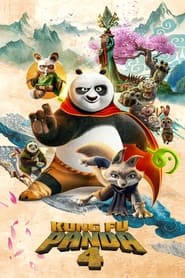
Kung Fu Panda 4
Po is gearing up to become the spiritual leader of his Valley of Peace, but also needs someone to take his place as Dragon Warrior. As such, he will train a new kung fu practitioner for the spot and will encounter a villain called the Chameleon who conjures villains from the past.
Mike Mitchell shoots the villain as a comedian who has decided that stealing jokes is not enough anymore.
Mike Mitchell understands that the best action comedies build the action around character rather than the other way around. The Chameleon can steal kung fu, but she cannot steal the understanding of why it works. At 7.0, this is a movie about the difference between technique and wisdom. Po has to learn that being the Dragon Warrior was never about being the best fighter. It was about knowing when not to fight. The shapeshifting villain is a useful metaphor for the same problem.
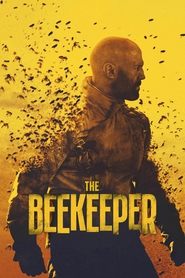
The Beekeeper
One man's campaign for vengeance takes on national stakes after he is revealed to be a former operative of a powerful and clandestine organization known as Beekeepers.
David Ayer shoots the phishing operation as a target rich environment. The revenge is methodical and the movie respects that method.
David Ayer constructs The Beekeeper around the same logic that made his best crime movies work: the protagonist is not angry. He is efficient. The revenge is not an explosion of emotion. It is a checklist. At 7.2, this is a thriller about the difference between wanting someone to pay and actually making them pay. Statham's character does not monologue. He just shows up at the next location on his list. The movie respects that discipline by refusing to moralise about it. The conspiracy goes all the way to the top and he keeps climbing.
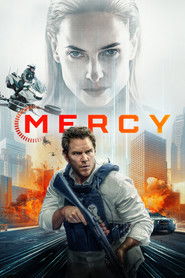
Mercy
In the near future, a detective stands on trial accused of murdering his wife. He has ninety minutes to prove his innocence to the advanced AI Judge he once championed, before it determines his fate.
Timur Bekmambetov shoots the negotiation as a chess match where the board is invisible and the pieces do not know they are playing.
Timur Bekmambetov constructs tension through the slow realisation that the hostage taker is not the real threat. The script has been written by someone who anticipated every response the negotiator could make. At 7.0, this is a thriller about the difference between being in control and believing that you are in control. The negotiator spends the runtime discovering that his every move was part of someone else's plan. The final act forces him to choose between saving the hostages and proving that he was never the one making the decisions.
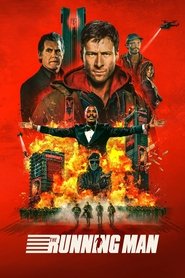
The Running Man
Desperate to save his sick daughter, working-class Ben Richards is convinced by The Running Man's charming but ruthless producer to enter the deadly competition game as a last resort. But Ben's defiance, instincts, and grit turn him into an unexpected fan favorite - and a threat to the entire system. As ratings skyrocket, so does the danger, and Ben must outwit not just the Hunters, but a nation addicted to watching him fall.
Edgar Wright shoots the game show as a critique of the attention economy. The contestants are not prisoners. They are content.
Edgar Wright constructs The Running Man around the same satirical instincts that defined his best work. The game show is not a dystopian future. It is a logical extension of current reality television. At 6.8, this is a thriller about the difference between surviving and winning. Glen Powell's character figures out that the only way to beat the system is to refuse to play by its rules. The third act is not about escaping the arena. It is about convincing the audience to look away.

Sonic the Hedgehog 3
Sonic, Knuckles, and Tails reunite against a powerful new adversary, Shadow, a mysterious villain with powers unlike anything they have faced before. With their abilities outmatched in every way, Team Sonic must seek out an unlikely alliance in hopes of stopping Shadow and protecting the planet.
Why watch: Action that actually has craft behind it. Jeff Fowler understands that the best action sequences are the ones where you understand the geography and care about the outcome.
The 7.6 rating reflects consistent craft across multiple dimensions. Movies scoring here have passed the test of broad audiences without compromising what makes them specific. That combination is rarer than it sounds. Jeff Fowler has put together something that works as a whole. The action sequences in this movie are directed with a clarity of geography that is increasingly rare. Jeff Fowler understands that the audience needs to know where everyone is and what they stand to lose before a single punch is thrown. Best suited for the viewer who has been scrolling past the obvious options all evening and is ready to commit to something that will not waste the next two hours.
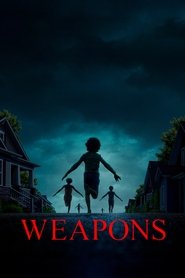
Weapons
When all but one child from the same class mysteriously vanish on the same night at exactly the same time, a community is left questioning who or what is behind their disappearance.
Why watch: Horror that works because it understands atmosphere. Weapons earns its scares rather than manufacturing them.
A rating of 7.3 places this movie solidly in the category of movies worth your time. It will not generate retrospectives or academic essays, but it will deliver what it promises and deliver it well. That is the relevant consideration here. Recommended for the viewer who prefers a movie that unsettles rather than shocks. The unease stays with you longer.

The Handmaiden
1930s Korea, in the period of Japanese occupation, a new girl, Sook-hee, is hired as a handmaiden to a Japanese heiress, Hideko, who lives a secluded life on a large countryside estate with her domineering Uncle Kouzuki. But the maid has a secret. She is a pickpocket recruited by a swindler posing as a Japanese Count to help him seduce the Lady to steal her fortune.
Park Chan-wook shoots the con as a romance and the romance as a con. You never know which layer you are watching until the scene is over.
Park Chan-wook constructs The Handmaiden around a structure that keeps the audience uncertain about who is deceiving whom until the final act. The movie is not a thriller with a twist. It is a thriller that twists constantly, and each twist recontextualises everything that came before. At 8.2, this is a movie about the difference between being tricked and choosing to be tricked. The heiress and the handmaiden are both manipulating each other, and both are being manipulated by forces they cannot see. The pleasure is in watching them figure it out together.
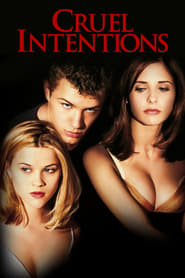
Cruel Intentions
Slaking a thirst for dangerous games, Kathryn challenges her stepbrother, Sebastian, to deflower their headmaster's daughter before the summer ends. If he succeeds, the prize is the chance to bed Kathryn. But if he loses, Kathryn will claim his most prized possession.
Roger Kumble shoots the wager as a tragedy disguised as a comedy. The money is not the point. The damage is the point.
Cruel Intentions is a catalogue title from 1999 that deserves rediscovery. Movies from this period did not have the safety net of franchise recognition. The ones that hold up do so on the strength of the filmmaking alone. At 6.8, this is a drama about the difference between winning and being right. Sarah Michelle Gellar's Kathryn has spent her life winning at games that were never worth playing. The movie does not redeem her. It just watches her realise that there is nothing left to win.
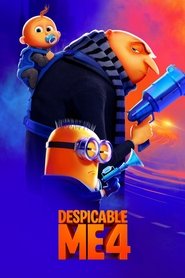
Despicable Me 4
Gru and Lucy and their girls - Margo, Edith and Agnes - welcome a new member to the Gru family, Gru Jr., who is intent on tormenting his dad. Gru also faces a new nemesis in Maxime Le Mal and his femme fatale girlfriend Valentina, forcing the family to go on the run.
Chris Renaud shoots the witness protection as a suburban comedy where the Minions are the least ridiculous element.
Chris Renaud understands that the Despicable Me franchise works best when Gru is the straight man to everyone else's chaos. The witness protection premise forces him to be normal in an environment that keeps getting weirder. At 7.0, this is a comedy about the difference between being a supervillain and being a dad. The two things are not as different as Gru thought. The Minions subplot about superpowers is almost irrelevant. The real story is about whether Gru can keep his family safe without using the skills that made him dangerous in the first place.
Prime Video availability varies by region. All titles listed here were confirmed available in the US catalogue at time of publication.
Best Streaming Movies by Genre Right Now
Thriller and Psychological Drama. Thriller and psychological drama are the strongest genres on streaming right now, with strong representation across all five platforms. The best psychological thrillers currently streaming reward the viewer who pays close attention from the first scene because the movies that work in this mode are built on information the audience does not know they are collecting until it becomes relevant. A thriller that only works in its final act has failed for most of its runtime. The best thrillers on this page work continuously: the tension is present in every scene and the payoff arrives as a consequence of everything that came before it rather than as a surprise designed to cover for a weak middle. The best psychological thrillers currently streaming are collected on the Best Psychological Thrillers page, which covers movies that genuinely challenge the viewer rather than just create tension through manufactured shocks. If you are looking specifically for the genre's upper tier, start with movies on this page that carry both a Thriller tag and a director whose previous work you have respected. That combination almost always produces the most satisfying version of the genre.
Action. Action movies with real craft behind them are harder to find than the volume of action content on streaming would suggest. The kind of action that shows up on this page is not the kind where geography is irrelevant and stakes feel weightless. The action movies listed across these five platforms this week all have directors who understand that action sequences work when the audience understands the space, understands what is at risk, and believes in the consequences. The best action cinema is not about scale. It is about specificity: the specific cost of every move, the specific geography of every space, the specific stakes for every character involved. When those three things are in place, action becomes one of the most viscerally satisfying modes in cinema. When they are absent, you have movement without meaning. The movies on this page tagged Action were selected specifically for the quality of the direction behind the sequences. Look at the director credited on each entry before you decide. A name you recognise for quality work in the genre is the most reliable guide to a good action movie currently available on streaming.
Drama. Drama is the broadest category and the most varied in quality. The drama movies on this list were selected specifically for their emotional intelligence. Movies about people making difficult decisions in complicated circumstances, without the sentimentality that drains most mainstream drama of its power. The best dramatic filmmaking operates on the basis that the audience is intelligent enough to draw their own conclusions from what they are shown rather than needing to be told what to feel. If that sounds like what you want tonight, the Movies to Feel Something Again page is a good companion read. Within the drama category on this page, pay particular attention to the movies with directors who have a track record in the genre. Drama directed by someone who genuinely understands the form is a completely different experience to drama that is simply a non-genre movie with a sufficiently sad premise. The difference is always visible in the direction.
Science Fiction. Science fiction on streaming right now ranges from hard SF with genuine ideas in it to blockbuster spectacle that uses the genre as a delivery mechanism for action. Both have value. The movies on this list that fall into the SF category are noted in their genre tags, and the editorial notes distinguish between the two types. If you want science fiction with genuine ideas in it, look at the movies with directors who have a track record in the genre. Science fiction that uses its speculative premise to say something about the present is consistently the most rewarding version of the genre because it gives the viewer two movies simultaneously: the story being told on screen and the argument being made about the world outside the cinema. See also the Best Sci-Fi Movies for People Who Don't Like Sci-Fi for the movies that work as pure cinema first and genre second.
Comedy. Comedy is underrepresented on this list not because good comedies are not streaming but because comedy dates faster than any other genre and platform algorithms tend to surface the most recent comedies regardless of quality. A movie that was genuinely funny two years ago can feel laboured today. The comedies on this page were selected specifically for timing and craft that holds up beyond the moment of its release. The test for a comedy's lasting value is whether it is funny because of what it observes or because of what was happening in culture at the moment it was made. The first kind survives. The second kind does not. Every comedy on this page was selected because it operates in the observation register rather than the cultural moment register. That is why they are still on a list in May 2026 rather than having been replaced by something made last month.
Documentary. Documentary and non-fiction movie is perhaps the strongest category on streaming right now across all platforms. The best documentaries currently available are movies that change the way you think about their subject rather than simply informing you about it. If a documentary ends and your understanding of the world has not shifted in some way, it has not done its job. The distinction between a documentary that informs and one that genuinely changes something in the viewer is not a difference in subject matter. It is a difference in filmmaking. The director of a great documentary knows what argument they are making, assembles their evidence with rigour, and trusts the audience enough to let the evidence do the persuading rather than manufacturing emotion to close the gap between what they have and what they need. The documentaries on this page meet that standard.
Western. The Western is one of cinema's oldest genres and streaming has given it a second life. The best Westerns currently available are not the genre movies of the classical era but movies that use the visual and narrative grammar of the Western to explore questions that remain genuinely current: land, violence, justice, and the distance between myth and reality. A Western that uses the genre honestly acknowledges the moral complexity of its setting in a way that the classical Hollywood Western rarely could. The movies in this category on streaming right now tend to be the post-revisionist variety: movies that know the genre's history and use that knowledge to produce something more morally sophisticated than their predecessors.
War. War cinema on streaming covers an enormous tonal range. At one end there is spectacle: the kind of war movie that is primarily interested in the scale and momentum of combat as a cinematic event. At the other end there is the kind of war movie that is primarily interested in what combat does to the human beings involved. The movies in the War category on this page tend toward the second type because those are the movies that hold up longest and deliver the most to the viewer who is not simply looking for an action experience with a historical setting. The best war cinema currently streaming is concerned with cost: the specific human cost of specific decisions made by specific people in situations where the consequences of getting it wrong are permanent.
Animation. Animation at the level of the movies on this page is not a children's genre. It is a form that allows a filmmaker to control every visual element of a movie completely, which produces a specific kind of cinema that no other format can replicate. The best animated movies currently streaming were made by directors who used that control with intention: every frame is a decision rather than a compromise with the limitations of live action. For the viewer who has not watched animated cinema as an adult, the movies in this category on the current list are the place to start. They demonstrate that the form has nothing to do with the age of the audience and everything to do with the ambition of the filmmaker.
Documentary. The best documentary movies currently streaming are listed across the platform sections above with Documentary in their genre tags. Non-fiction cinema on streaming has never been stronger. The form has attracted filmmakers with serious ambitions and the platforms have given those filmmakers the resources to pursue subjects that theatrical distribution would not have supported. The result is a documentary landscape where the best movies are as formally sophisticated and as emotionally affecting as the best fiction movies on the same platform. If you have not watched a documentary since being made to watch one at school, the current streaming catalogue is the place to reconsider that avoidance.
Biography. Biographical cinema on streaming has a reputation problem. The standard biopic format is so formulaic that the word itself has become a mild insult among movie critics. But the biographical movies on this page were selected specifically because they resist that formula. A great biographical movie is not a greatest hits compilation of a famous person's life set to period-appropriate music. It is a movie that asks a specific question about its subject and answers it through specific scenes rather than through montage and narration. The biographical movies currently available on streaming that meet that standard are the ones identified in the editorial notes on this page as working with genuine formal ambition.
Romance. Romance as a movie genre is consistently underestimated as a vehicle for serious cinema. The movies on this page that carry a Romance tag were selected because they understand that a convincing romantic relationship on movie requires the same elements as any other convincing human portrayal: specificity, contradiction, and the kind of emotional detail that cannot be manufactured through casting attractive people in atmospheric locations. The best romantic movies currently streaming are about people who feel real because the writing and direction have put in the work to make them real. They are worth finding because they demonstrate what the genre can do when it is taken seriously as a form. For more, the Movies That Make You Feel Less Alone page covers this territory in depth.
Foreign Language. Foreign language cinema on streaming is one of the great available resources that most viewers in the English-speaking world systematically ignore. The best non-English language movies currently available across these five platforms are not movies that require special preparation or a tolerance for subtitles that not everyone has. They are simply great movies that happen to be in a language other than English. The bias against subtitled cinema is a trained response rather than an instinctive one, and once it is overcome the available catalogue expands enormously. Every platform on this page carries foreign language titles and several of the most formally interesting movies currently streaming happen to be in this category. The Best Foreign Language Movies for People Who Don't Usually Watch Subtitles is the place to start if this is unfamiliar territory.
Best Movies on HBO Max Right Now (May 2026)
HBO Max carries the legacy of decades of prestige filmmaking and the platform curates with a confidence that its competitors rarely match. The catalogue here leans into quality in a way that is immediately apparent. Fewer algorithm-chasing choices, more movies that actually have something to say. The best movies on HBO Max right now include some of the most formally ambitious movies currently available on any streaming platform. These 30 picks represent the platform at its most coherent: cinema that was made with a point of view and selected by people who understood what they were looking for.

The Devil Wears Prada
A young woman from the Midwest gets more than she bargained for when she moves to New York to become a writer and ends up as the assistant to the tyrannical, larger-than-life editor-in-chief of a major fashion magazine.
Why watch: The kind of drama that stays with you well after the credits. David Frankel brings a precision to the material that elevates it above most of what is available this week.
The Devil Wears Prada is a film about ambition as slow erosion — the way a job you didn't plan to care about can incrementally become the thing that defines you. Frankel keeps Streep's Miranda largely in the background until the film is ready to reveal her, which means every entrance carries disproportionate weight. The Paris sequence is where the film earns its ending: two scenes that reframe everything before them without undoing anything. Andy's final choice reads differently on a second viewing, because the film has been careful not to tell you whether she made the right call. At 7.4, this is a workplace drama that respects the complexity of wanting things you weren't supposed to want.
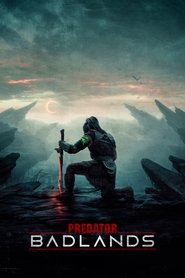
Predator: Badlands
Cast out from his clan, a young Predator finds an unlikely ally in a damaged android and embarks on a treacherous journey in search of the ultimate adversary.
Dan Trachtenberg shoots the synthetic human as a diplomatic problem. The Predators have honour codes. She has to learn them faster than they can kill her.
Dan Trachtenberg constructs Predator: Badlands around the same premise that made Prey work: the hunter is not the only threat. The environment is also dangerous, and the protagonist has to navigate both. At 7.7, this is an action movie about the difference between being prey and being a guest. The synthetic human was designed by the Predators, but she was not designed to have agency. The movie follows her as she discovers that she can choose which side to serve. The third act forces her to decide whether loyalty is programmed or earned.
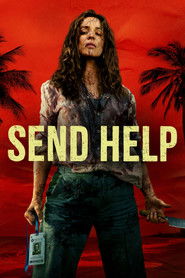
Send Help
Two colleagues become stranded on a deserted island, the only survivors of a plane crash. On the island, they must overcome past grievances and work together to survive, but ultimately, it's a battle of wills and wits to make it out alive.
Sam Raimi shoots the island as a trap that is also a stage. The stranded characters are performing for each other and the audience is the only one who knows the script.
Sam Raimi constructs tension through the gap between what the characters say and what they actually mean. The island setting strips away the social conventions that normally keep people from telling the truth. At 7.0, this is a thriller about the difference between being alone and being with people you cannot trust. The two colleagues have a history that the movie reveals slowly, through the things they do not say. Raimi's horror instincts serve the material well: the scares are not supernatural. They are the scares of realising that the person next to you has been lying for years.
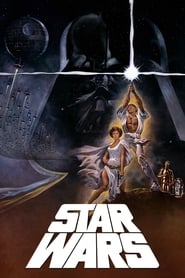
Star Wars
Princess Leia is captured and held hostage by the evil Imperial forces in their effort to take over the galactic Empire. Venturesome Luke Skywalker and dashing captain Han Solo team together with the loveable robot duo R2-D2 and C-3PO to rescue the beautiful princess and restore peace and justice in the Empire.
George Lucas shoots the trench run as a religious experience. The Force is not a power. It is a way of seeing the world differently.
Star Wars is a catalogue title from 1977 that deserves rediscovery. Movies from this era were not built for streaming catalogues. They were built to stand alone. At 8.2, this is an action movie about the difference between technology and instinct. The Death Star has a weakness that only someone willing to turn off his computer can exploit. Luke's arc is not about learning to fight. It is about learning to trust something that cannot be measured. The movie has been imitated so often that its originality is easy to forget. The original still works because the emotions underneath the spectacle are real.
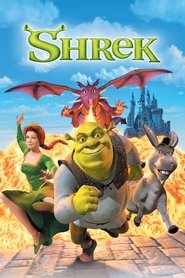
Shrek
It ain't easy bein' green -- especially if you're a likable (albeit smelly) ogre named Shrek. On a mission to retrieve a gorgeous princess from the clutches of a fire-breathing dragon, Shrek teams up with an unlikely compatriot -- a wisecracking donkey.
Why watch: A movie that is genuinely funny rather than just marketed as one. Watch with people who appreciate wit over noise.
Shrek was genuinely subversive in 2001 and most of that subversion still lands. Adamson and Jenson built the film's comedy around something the genre rarely attempts: a protagonist who is actually right that the world mistreats him, and a romantic plot that works because both leads are fundamentally unsuited to the conventions they keep being pushed toward. The fairy tale satire is the surface layer. Underneath is a film about outsiders who find that the people most convinced they belong are often the most dangerous. At 7.8, this is animation that holds up for the same reason the best live-action holds up: the emotions driving it are specific and real.
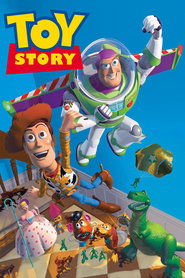
Toy Story
Led by Woody, Andy's toys live happily in his room until Andy's birthday brings Buzz Lightyear onto the scene. Afraid of losing his place in Andy's heart, Woody plots against Buzz. But when circumstances separate Buzz and Woody from their owner, the duo eventually learns to put aside their differences.
John Lasseter shoots the toys as people with jobs, families and existential dread. The comedy is in the specificity of their anxieties.
Toy Story is a catalogue title from 1995 that deserves rediscovery. This era of filmmaking did not have the sequel planning or franchise infrastructure that now surrounds most major releases. At 8.0, this is a comedy about the difference between being a favourite and being replaced. Woody's fear is not about Buzz. It is about Andy growing up and moving on. The movie treats that fear with the seriousness it deserves. The comedy comes from the gap between the scale of the emotions and the scale of the characters experiencing them. A toy's existential crisis is still an existential crisis.
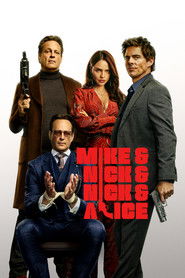
Mike & Nick & Nick & Alice
Two gangsters and the woman they love try to survive the most dangerous night of their lives. As if that wasn’t enough, there’s one wild ingredient added to the mix: a time machine.
BenDavid Grabinski shoots the confession scene as a logistical puzzle. Who knows what and when did they know it? The answer keeps changing.
BenDavid Grabinski constructs the comedy around the same information asymmetry that drives thrillers. The two couples have been cheating across each other and none of them has the complete picture. At 6.8, this is a movie about the difference between honesty and disclosure. The characters are not lying to each other. They are just revealing information in the order that benefits them most. Grabinski shoots the conversations as negotiations, not confrontations. The fun is in watching people who are good at talking talk their way out of consequences that they probably deserve.
Godzilla x Kong: The New Empire
Following their explosive showdown, Godzilla and Kong must reunite against a colossal undiscovered threat hidden within our world, challenging their very existence – and our own.
Adam Wingard shoots the monster fights as boxing matches. There is geometry to the chaos and he makes sure you can read it.
Adam Wingard understands that monster movies work when the audience can follow the geography of the brawl. The titans are not just smashing things. They are making strategic decisions. At 7.1, this is an action movie about the difference between raw power and technique. Kong has been learning to fight in Hollow Earth. Godzilla has been defending the surface alone. When they face the new threat together, the movie makes sure you can see who is using what skills. The human plot is functional. The monster fights are where the craft lives.
Ready or Not
A young bride's wedding night turns into her worst nightmare when her ridiculously rich in-laws force her to play a gruesome game of hide-and-seek.
Matt Bettinelli-Olpin shoots the wedding night as a class critique. The game is a metaphor and the metaphor is not subtle. That is the point.
Matt Bettinelli-Olpin constructs Ready or Not around the simple premise that rich people have been playing games with other people's lives for centuries and they have gotten very good at it. The bride is not a victim. She is a guest who did not read the fine print. At 7.1, this is a comedy about the difference between winning and surviving. The family has been playing this game for generations. They know the rules. The bride has to learn them in real time. The movie does not let the family off the hook. It just watches them do what they have always done and asks whether the bride is willing to do the same.

A Perfect Ending
This intimate drama follows Rebecca, a woman who has kept her sexuality a secret from her friends but chooses to reveal it to a stranger. While Rebecca's revelations may not yield the results she expects, a perfect ending is still in reach.
Nicole Conn shoots the escort as a mirror. The protagonist is not paying for sex. She is paying for permission to tell the truth.
Nicole Conn works in the space between what the protagonist has spent her life building and what she has been afraid to want. The escort is not a seducer. She is a professional who has heard versions of this story before. At 6.2, this is a drama about the difference between being desired and being known. The movie does not judge the protagonist for waiting decades to ask for what she needs. It just watches her finally ask. The ending is quiet and the movie earns that quiet by refusing to turn the confession into a spectacle.

Spider-Man 3
The seemingly invincible Spider-Man goes up against an all-new crop of villains - including the shape-shifting Sandman. While Spider-Man’s superpowers are altered by an alien organism, his alter ego, Peter Parker, deals with nemesis Eddie Brock and also gets caught up in a love triangle.
Why watch: Action that actually has craft behind it. Sam Raimi understands that the best action sequences are the ones where you understand the geography and care about the outcome.
Spider-Man 3 is a compromised film — Raimi has said publicly that Venom was a studio demand he had no interest in fulfilling — and the seams show. But what it does with Peter Parker is more interesting than its reputation suggests. The black-suit arc is a genuine attempt to dramatise ego and entitlement in a character the audience has been rooting for, and the scene where Peter hurts Mary Jane is one of the most uncomfortable moments in the franchise precisely because the film earns it. A flawed third act on a trilogy that was otherwise built with care. The craftsmanship in the individual set pieces is still Raimi's, which means it still rewards the attention.
White Chicks
Two FBI agent brothers, Marcus and Kevin Copeland, accidentally foil a drug bust. To avoid being fired they accept a mission escorting a pair of socialites to the Hamptons--but when the girls are disfigured in a car accident, they refuse to go. Left without options, Marcus and Kevin decide to pose as the sisters, transforming themselves from black men into rich European-American women.
Why watch: A movie that is genuinely funny rather than just marketed as one. Watch with people who appreciate wit over noise.
White Chicks is a film the critical consensus got wrong on first release and has been slowly correcting ever since. The Wayans brothers understood that the premise — two Black FBI agents going undercover as white socialites — only works as comedy if it's also a genuine critique of the milieu being infiltrated. The Hamptons social scene is satirised with a specific cruelty that the disguise gives the film permission to apply. The gross-out set pieces are broad, but the film's awareness of race, performance and class is not. It has aged into something more interesting than it was marketed as.

Finding Nemo
Nemo, an adventurous young clownfish, is unexpectedly taken from his Great Barrier Reef home to a dentist's office aquarium. It's up to his worrisome father Marlin and a friendly but forgetful fish Dory to bring Nemo home -- meeting vegetarian sharks, surfer dude turtles, hypnotic jellyfish, hungry seagulls, and more along the way.
Why watch: Animation at the level where the craft alone is worth watching. This one rewards close attention to what is happening in every frame.
Finding Nemo is built around a parent's worst fear and refuses to let that fear become manageable too quickly. The opening sequence is one of the most brutal in Pixar's catalogue and Stanton uses it to establish the emotional stakes that everything else must live inside. The ocean geography does serious structural work throughout: when a clownfish is searching for his son in the entire Pacific, the comedy and the terror of that scale must coexist without one undercutting the other. At 7.8, this remains one of the cleanest structural achievements in family animation — a film that works completely differently depending on whose perspective you bring to it, delivering something real to every age in the room.
Captain America: Civil War
Following the events of Age of Ultron, the collective governments of the world pass an act designed to regulate all superhuman activity. This polarizes opinion amongst the Avengers, causing two factions to side with Iron Man or Captain America, which causes an epic battle between former allies.
Joe Russo shoots the airport fight as a disagreement about jurisdiction. The punches are arguments and you can follow both sides.
Joe Russo constructs the action around the same principle that made the best political thrillers work: the fight is not about who is stronger. It is about who is right. At 7.4, this is an action movie about the difference between being accountable and being controlled. Cap and Tony both have legitimate positions. The movie respects both arguments enough to let them clash without resolving them cleanly. The airport sequence works because you know why everyone is fighting. The geography is clear. The stakes are personal. The punches hurt because the people throwing them used to be friends.
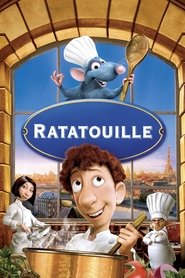
Ratatouille
Remy, a rat, possesses a palate far more refined than that of his fellow comrades. He dreams of becoming a chef, one who creates rather than scavenges. When fate deposits him in the sewers beneath one of Paris’s most famous restaurants, he finds himself ideally placed to fulfill his dream. Forming an unusual alliance with a hapless young kitchen worker, Remy begins a daring culinary double life. As Remy pursues his vision, he must navigate the suspicions of the calculating Head Chef Skinner, the disapproval of Remy’s own colony, and the foreboding presence of renowned food critic Anton Ego, who strikes fear in the hearts of chefs all throughout France.
Why watch: A movie that is genuinely funny rather than just marketed as one. Watch with people who appreciate wit over noise.
Ratatouille contains one of the finest sequences in animated film: the moment where critic Anton Ego tastes Remy's ratatouille and is involuntarily transported to his childhood kitchen. Bird renders memory as pure sensation — colour temperature, the weight of a fork, the smell of a mother's cooking — and the scene works because everything built before it has been earned honestly. The film's central argument, that great art can come from anywhere and anyone who denies this is doing it for political rather than aesthetic reasons, is stated explicitly in the third act and lands because the movie has demonstrated it rather than simply asserted it. At 7.8, this is among the best cases for animation as a serious form.
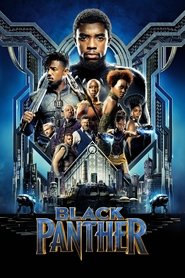
Black Panther
King T'Challa returns home to the reclusive, technologically advanced African nation of Wakanda to serve as his country's new leader. However, T'Challa soon finds that he is challenged for the throne by factions within his own country as well as without. Using powers reserved to Wakandan kings, T'Challa assumes the Black Panther mantle to join with ex-girlfriend Nakia, the queen-mother, his princess-kid sister, members of the Dora Milaje (the Wakandan 'special forces') and an American secret agent, to prevent Wakanda from being dragged into a world war.
Ryan Coogler shoots the waterfall fight as a legal proceeding. The challenge is not about strength. It is about legitimacy.
Ryan Coogler constructs Black Panther around the question of what a leader owes to the people who came before and the people who will come after. Killmonger is not a villain with a tragic backstory. He is a man with a legitimate grievance who is willing to burn everything down to address it. At 7.4, this is an action movie about the difference between tradition and justice. T'Challa has to learn that his father's legacy is not clean. The movie forces him to sit with that knowledge and decide what kind of king he wants to be. The third act is not about defeating Killmonger. It is about understanding him well enough to honour what he was trying to say.
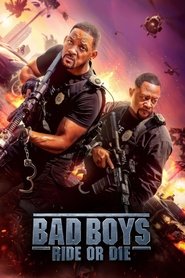
Bad Boys: Ride or Die
After their late former Captain is framed, Lowrey and Burnett try to clear his name, only to end up on the run themselves.
Adil El Arbi shoots the Miami chase sequences as a conversation. Mike and Marcus argue while driving. The action is punctuation, not dialogue.
Adil El Arbi understands that the Bad Boys movies work because of the chemistry between the leads, not because of the explosions. The action sequences are structured around the rhythms of their banter. At 7.3, this is an action comedy about the difference between being framed and being guilty. Marcus and Mike have spent decades bending the rules. Now someone is using that history against them. The movie does not pretend they are innocent. It just asks whether they deserve to be judged by the same system they have been breaking for thirty years.

Anora
A young sex worker from Brooklyn gets her chance at a Cinderella story when she meets and impulsively marries the son of an oligarch. Once the news reaches Russia, her fairytale is threatened as his parents set out to get the marriage annulled.
Sean Baker shoots the marriage as a business transaction that both parties mistake for something else. The mistake is the movie.
Sean Baker works in the register of observational drama. The camera does not judge the characters. It just watches them make decisions that they will regret. At 7.1, this is a movie about the difference between being chosen and being used. Anora thinks she is marrying into a fairy tale. The oligarch's son thinks he is having an adventure. Neither of them is prepared for what happens when the parents arrive. Baker shoots the family confrontation as a comedy of manners where the manners are brutal and the comedy is almost unbearable.
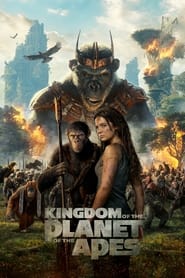
Kingdom of the Planet of the Apes
Several generations following Caesar's reign, apes – now the dominant species – live harmoniously while humans have been reduced to living in the shadows. As a new tyrannical ape leader builds his empire, one young ape undertakes a harrowing journey that will cause him to question all he's known about the past and to make choices that will define a future for apes and humans alike.
Wes Ball shoots the ape society as a religious schism. The debate is about what Caesar actually meant and who gets to speak for him.
Wes Ball constructs Kingdom around the same question that has driven the best entries in the franchise: what does it mean to inherit a legacy that you did not earn? The new ape ruler claims to be following Caesar's teachings. He is not. The young ape protagonist has to figure out the difference between the words and the deeds. At 7.1, this is an action movie about the difference between tradition and truth. The movie takes its time establishing the ape society before the conflict begins. That patience pays off when the fighting starts because you understand what everyone is fighting for.

We Bury the Dead
After a catastrophic military disaster, the dead don't just rise - they hunt. Ava searches for her missing husband, but what she finds is far more terrifying.
Zak Hilditch shoots the outbreak as a labour dispute. The dead are not mindless. They are on strike and no one knows what they want.
Zak Hilditch constructs We Bury the Dead around the premise that the infected are not monsters. They are people who stopped dying properly and now they have demands. At 5.9, this is a horror thriller about the difference between fighting an enemy and negotiating with one. The survivors spend most of the runtime trying to figure out what the dead actually want. The movie does not provide a clean answer. It just watches the characters try different approaches and fail. The ending is ambiguous and that ambiguity is the point.
The Wailing
A stranger arrives in a little village and soon after a mysterious sickness starts spreading. A policeman is drawn into the incident and is forced to solve the mystery in order to save his daughter.
Why watch: Horror that works because it understands atmosphere. The Wailing earns its scares rather than manufacturing them.
A rating of 7.4 places this movie solidly in the category of movies worth your time. It is not the score critics debate but it is the score that means the movie worked for the people who watched it. That is the more reliable signal. Best suited for the viewer who wants atmosphere over cheap shocks and is willing to let the movie take its time getting there.

Alien: Romulus
While scavenging the deep ends of a derelict space station, a group of young space colonizers come face to face with the most terrifying life form in the universe.
Why watch: Horror that works because it understands atmosphere. Alien: Romulus earns its scares rather than manufacturing them.
A rating of 7.2 places this movie solidly in the category of movies worth your time. It will not generate retrospectives or academic essays, but it will deliver what it promises and deliver it well. That is the relevant consideration here. For the viewer who prefers mood and texture over speed. The movie earns its slow moments.
Once Upon a Time... in Hollywood
Los Angeles, 1969. TV star Rick Dalton, a struggling actor specializing in westerns, and stuntman Cliff Booth, his best friend, try to survive in a constantly changing movie industry. Dalton is the neighbor of the young and promising actress and model Sharon Tate, who has just married the prestigious Polish director Roman Polanski…
Quentin Tarantino shoots the Manson family as tourists. They are not prepared for what they find at the Tate house. That is the joke and the tragedy.
Quentin Tarantino constructs Once Upon a Time in Hollywood around the same revisionist impulse that defined Inglourious Basterds. The movie rewrites history to give its characters a happier ending than the one they actually got. At 7.4, this is a thriller about the difference between what happened and what should have happened. The final act is cathartic because it is impossible. Tarantino knows that. He is not pretending otherwise. He is just giving Sharon Tate the ending she deserved, even if only in a movie.
Predator
A team of elite commandos on a secret mission in a Central American jungle come to find themselves hunted by an extraterrestrial warrior.
John McTiernan shoots the jungle as a character. The Predator is not the only thing hunting the team. The environment is also trying to kill them.
Predator is a catalogue title from 1987 that deserves rediscovery. Movies from this period were not built for streaming catalogues. They were built to stand alone. At 7.6, this is an action movie about the difference between being the hunter and being the prey. The special forces team spends the first half of the movie thinking they are in control. The second half is about watching them realise that they were never in control. McTiernan shoots the jungle as a labyrinth. The Predator is just the thing that lives there.

Perfect Days
Hirayama is content with his life as a toilet cleaner in Tokyo. Outside of his structured routine, he cherishes music on cassette tapes, books, and taking photos of trees. Through unexpected encounters, he reflects on finding beauty in the world.
Wim Wenders shoots the toilet cleaner's routine as a meditation. Nothing happens and everything happens. You have to be patient enough to notice the difference.
Wim Wenders works in a register that most directors avoid because it requires patience. The scenes breathe past the point where a less confident filmmaker would cut away. At 7.8, this is a drama about the difference between a routine and a ritual. The protagonist does the same things every day. The movie asks you to notice the small variations: a different tree, a stranger's smile, a cassette tape that plays differently than it did yesterday. The ending is not a resolution. It is just another day, and that is enough.
Shrek 2
Happily ever after never seemed so far far away when a trip to meet the in-laws turns into a hilariously twisted adventure for Shrek and Fiona. With the help of his faithful Donkey, Shrek takes on a potion-brewing Fairy Godmother, the pompous Prince Charming, and the ogre-killer, Puss In Boots.
Why watch: A movie that is genuinely funny rather than just marketed as one. Watch with people who appreciate wit over noise.
Shrek 2 is the rare sequel that understood the first film well enough to complicate it productively. Where the original was about earning acceptance, the second is about meeting the parents — and what happens when the people closest to you turn out to have spent years building a fantasy about who you'd become. Antonio Banderas's Puss in Boots arrives fully formed in his first scene, the Fairy Godmother is a villain whose menace comes from her conviction that she's the hero, and the film's action finale at the ball works because it's earned its stakes through character logic rather than spectacle. Funnier than the first and, on balance, structurally tighter.
Girl in the Basement
Sara is a teen girl who is looking forward to her 18th birthday to move away from her controlling father Don. But before she could even blow out the candles, Don imprisons her in the basement of their home.
Elisabeth Rohm shoots the captivity as a procedural. The horror is in the logistics. How do you hide someone for twenty years? The movie answers that question in detail.
Elisabeth Rohm constructs Girl in the Basement around the banality of evil. The father does not monologue. He just builds a routine and sticks to it. At 7.6, this is a thriller about the difference between being a victim and being a survivor. The protagonist spends years adapting to her circumstances. The movie does not flinch from the details of that adaptation. The ending is not triumphant. It is just the moment when the routine finally breaks. Rohm earns that moment by spending the rest of the runtime showing you how hard it was to maintain.

Anyone But You
After an amazing first date, Bea and Ben’s fiery attraction turns ice cold - until they find themselves unexpectedly reunited at a destination wedding in Australia. So they do what any two mature adults would do: pretend to be a couple.
Will Gluck shoots the fake relationship as a farce where both participants are pretending to be bad at pretending. The layers are the joke.
Will Gluck understands that the best romantic comedies are built on misunderstandings that the characters are too proud to correct. The fake relationship premise gives the movie permission to escalate those misunderstandings beyond the point of believability. At 6.8, this is a comedy about the difference between pretending to like someone and actually liking them. The leads spend most of the runtime trying to convince everyone else that they are a couple. The movie is funnier when they start trying to convince themselves.
HBO Max occasionally moves movies between its standard library and its premium add-on tiers. All titles here are available on the standard subscription.
Best Directors on Streaming Right Now
These are the filmmakers whose work appears across the five platforms this week. A director's name in the credits is often the most reliable signal of quality available. Cast can be bought. Production design can be hired. But the sensibility that shapes a movie from first frame to last belongs to the director and it is the one element that cannot be faked. If you recognise a name here from previous work you admired, trust that instinct. The movie on streaming right now is the next thing to see from that person.
Best Movies on Apple TV+ Right Now (May 2026)
Apple TV+ has earned its reputation quickly. The platform invests in original movies that most studios would not have greenlit and the results speak for themselves. The library is smaller than its competitors but the curation is tighter. Almost everything Apple puts on its platform was made with genuine craft and genuine intent. The best movies on Apple TV+ right now are the movies the platform was built to showcase. The 30 titles listed below include original productions and licensed movies that meet the same standard of intentional, well-made cinema that defines what Apple TV+ is trying to be.

F1
Racing legend Sonny Hayes is coaxed out of retirement to lead a struggling Formula 1 team - and mentor a young hotshot driver - while chasing one more chance at glory.
Joseph Kosinski shoots the racing sequences as conversations. The cars are not just moving fast. They are negotiating with the track and with each other.
Joseph Kosinski constructs F1 around the same attention to physical detail that made Top Gun: Maverick work. The racing sequences are not just about speed. They are about the decisions that drivers make at speed. At 7.8, this is a drama about the difference between being fast and being smart. The veteran driver has the experience. The rookie has the talent. The movie is about whether they can learn from each other before the season ends. Kosinski shoots the races so that you can follow the strategy. The crashes are not just spectacle. They are the consequences of bad decisions.

The Gorge
Two highly trained operatives grow close from a distance after being sent to guard opposite sides of a mysterious gorge. When an evil below emerges, they must work together to survive what lies within.
Why watch: A thriller that holds its tension from the opening sequence to the final frame. Directed by Scott Derrickson, this is exactly the kind of movie streaming was made for.
The 7.6 rating reflects consistent craft across multiple dimensions. Movies in this range tend to be the ones where the directing, writing and performance all operate at the same level rather than one department carrying the others. Scott Derrickson has put together something that works as a whole. Scott Derrickson constructs tension through precision rather than volume. The movie does not mistake noise for stakes or speed for momentum. What makes it work is a sustained commitment to the logic of its own world, which means the payoffs feel earned rather than manufactured. Among Apple TV+'s thriller offerings this week, The Gorge is the one where the restraint is doing as much work as the action. It earns its final act.

The Family Plan
Dan Morgan is many things: a devoted husband, a loving father, a celebrated car salesman. He's also a former assassin. And when his past catches up to his present, he's forced to take his unsuspecting family on a road trip unlike any other.
Simon Cellan Jones shoots the suburban dad as a man who has been waiting for an excuse to use the skills he has been hiding. The excuse arrives in the first act.
Simon Cellan Jones constructs The Family Plan around the premise that domestic life is already an extraction mission. The protagonist just did not know it. At 7.2, this is an action comedy about the difference between being a father and being a former assassin. The two roles are not as different as Dan thought. The movie spends most of its runtime watching him apply tradecraft to parenting problems. The action sequences are efficient and the jokes land because they come from character. The family does not slow him down. They are the reason he is still alive.
Wolfs
Hired to cover up a high-profile crime, a fixer soon finds his night spiralling out of control when he's forced to work with an unexpected counterpart.
Jon Watts shoots the fixers as professionals who have spent decades working alone. Watching them learn to share a crime scene is the whole movie.
Jon Watts constructs Wolfs around the same dynamic that made the best buddy comedies work: two people who are very good at their jobs are forced to work together and they hate every second of it. At 6.5, this is a comedy about the difference between competence and collaboration. Clooney and Pitt have been playing versions of these characters for years. The movie trusts them to find the rhythm. The crime scene is a mess. The clean up is the plot. The pleasure is in watching two craftsmen who have never had to coordinate figure out how to do it in real time.

The Family Plan 2
Now that Dan's assassin days are behind him, all he wants for Christmas is quality time with his kids. But when he learns his daughter has her own plans, he books a family trip to London - putting them all in the crosshairs of an unexpected enemy.
Simon Cellan Jones shoots the sequel as a vacation movie where the vacation is also an extraction. The family is getting better at this. That is the problem.
Simon Cellan Jones constructs The Family Plan 2 around the premise that the family has adapted to Dan's lifestyle faster than he expected. The kids are not liabilities anymore. They are assets. At 6.6, this is an action comedy about the difference between protecting your family and training them to protect themselves. The vacation setting gives the movie permission to escalate the stakes while keeping the tone light. The third act forces Dan to decide whether he wants his children to follow in his footsteps or whether he wants to give them the normal life he never had.

Selena Gomez: My Mind & Me
After years in the limelight, Selena Gomez achieves unimaginable stardom. But just as she reaches a new peak, an unexpected turn pulls her into darkness. This uniquely raw and intimate documentary spans her six-year journey into a new light.
Alek Keshishian follows Selena Gomez with enough patience to catch the moments she would have edited out herself. That is the whole film.
Alek Keshishian constructs the documentary around the premise that the most revealing moments are the ones that happen between the performances. Gomez is not performing for the camera. She is just living alongside it. At 7.2, this is a film about the difference between being known and being understood. The mental health narrative is handled without the sentimentality that usually accompanies celebrity documentaries. The camera stays close and the editing does not rush to conclusions. The result is a portrait that respects its subject by refusing to simplify her.
Outcome
Reef Hawk, Hollywood's poster child since age six, is not okay. When he learns about an extortion plot tied to a mysterious video, Reef preemptively sets out on a redemption tour to make amends, confront his demons, and avoid getting canceled.
Jonah Hill shoots the sports agent as a man who built his entire identity around a job and then lost the job. The movie is about watching him figure out who is left.
Jonah Hill works in a register that most directors avoid because it requires patience. The scenes breathe past the point where a less confident filmmaker would cut away. At 5.2, this is a drama about the difference between a career and a life. The protagonist has spent twenty years being the person who gets things done. When he stops getting things done, he has to learn how to be a person again. The movie does not provide easy answers. It just watches him try and fail and try again. The rating reflects the uneven execution, but the ambition is real and the second half finds a rhythm that the first half lacks.
Killers of the Flower Moon
When oil is discovered in 1920s Oklahoma under Osage Nation land, the Osage people are murdered one by one - until the FBI steps in to unravel the mystery.
Martin Scorsese shoots the Osage murders as a business dispute. The oil money is the motive and the bodies are just accounting.
Martin Scorsese works in a register that most directors avoid because it requires patience. The movie runs over three hours and earns every minute. At 7.4, this is a drama about the difference between justice and procedure. The FBI is new and inexperienced. The murders keep happening while they learn how to investigate. Scorsese does not let the audience forget that the victims had names and families. The third act is not a courtroom triumph. It is a confession that the system was never designed to protect the people who needed it most.
Eternity
In an afterlife where souls have one week to decide where to spend eternity, Joan is faced with the impossible choice between the man she spent her life with and her first love, who died young and has waited decades for her to arrive.
David Freyne shoots the immortals as people who have run out of excuses. They have been alive for centuries. They have been avoiding each other for most of that time.
David Freyne works in the space between what the characters have been doing for hundreds of years and what they actually want. The immortality premise is not a fantasy. It is a prison. At 7.0, this is a drama about the difference between living forever and living well. The two leads have spent centuries perfecting the art of not committing. The movie watches them fail at that art. The romance is slow and the movie respects that slowness. The ending is not a guarantee. It is just a decision to try.
Luck
Suddenly finding herself in the never-before-seen Land of Luck, the unluckiest person in the world must unite with the magical creatures there to turn her luck around.
Peggy Holmes shoots the supply chain of good fortune as a bureaucracy. The comedy is in the paperwork.
Peggy Holmes understands that the best animated comedies build their worlds with the same rigour that a live action drama would apply to a courtroom. The Land of Luck has rules. The protagonist has to learn those rules. At 7.7, this is a comedy about the difference between being lucky and being prepared. The unluckiest girl in the world has spent her life adapting to circumstances that keep going wrong. When she finally arrives in the Land of Luck, she discovers that the people running the place are not as competent as she hoped. The movie is about whether she can fix their systems before her luck runs out.

Napoleon
An epic that details the checkered rise and fall of French Emperor Napoleon Bonaparte and his relentless journey to power through the prism of his addictive, volatile relationship with his wife, Josephine.
Why watch: A movie about people with real emotional intelligence. Napoleon respects its audience enough to make the relationships feel earned.
Napoleon is a film that treats its subject with the particular contempt Ridley Scott reserves for people who believe their own mythology. It is more interesting for that contempt than it would have been for reverence.
Greyhound
A first-time captain leads a convoy of allied ships carrying thousands of soldiers across the treacherous waters of the "Black Pit" to the front lines of WWII. With no air cover protection for 5 days, the captain and his convoy must battle the surrounding enemy Nazi U-boats in order to give the allies a chance to win the war.
Aaron Schneider shoots the Atlantic crossing as a logistical nightmare. The U-boats are not monsters. They are problems that need to be solved in real time.
Aaron Schneider constructs Greyhound around the premise that naval combat is a management problem. The commander does not have time to be scared. He has to make decisions. At 7.4, this is a drama about the difference between courage and competence. Tom Hanks plays the captain as a man who has trained for this moment his entire career. The movie watches him apply that training while everything goes wrong around him. The runtime is short and the tension never lets up. Schneider shoots the action so that you can follow the tactical logic. The fear comes from understanding the stakes, not from jump scares.
Ghosted
Salt-of-the-earth Cole falls head over heels for enigmatic Sadie - but then makes the shocking discovery that she's a secret agent. Before they can decide on a second date, Cole and Sadie are swept away on an international adventure to save the world.
Dexter Fletcher shoots the farmers market date as the most dangerous part of the movie. The espionage plot is just an excuse to keep the characters running.
Dexter Fletcher constructs Ghosted around the premise that the meet cute is the real story. The action sequences are interruptions to the relationship, not the other way around. At 6.9, this is an action comedy about the difference between being in love and being in danger. The protagonists spend most of the runtime trying to have a conversation while people are trying to kill them. The movie works because Evans and de Armas commit to the romance with the same intensity that they bring to the fight scenes. The third act is ridiculous and the movie knows it.
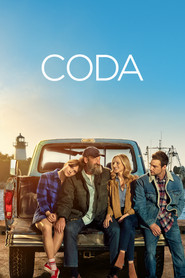
CODA
As a CODA (Child of Deaf Adults), Ruby is the only hearing person in her deaf family. When the family's fishing business is threatened, Ruby finds herself torn between pursuing her love of music and her fear of abandoning her parents.
Sian Heder shoots the singing as a translation problem. The protagonist has to learn how to use her voice after spending her whole life using it for other people.
Sian Heder works in the space between what Ruby has been doing for her family and what she wants to do for herself. The movie does not pretend that her family is wrong to depend on her. It just asks whether she is allowed to want something else. At 7.9, this is a drama about the difference between obligation and love. The audition scene works because the movie has spent its runtime establishing that Ruby's voice is not just a talent. It is a thing she has been hiding because using it meant leaving. The ending is earned because the movie has made the cost of that ending clear.
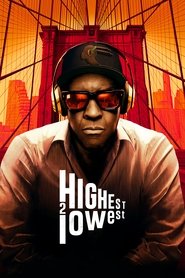
Highest 2 Lowest
When a titan music mogul, widely known as having the "best ears in the business", is targeted with a ransom plot, he is jammed up in a life-or-death moral dilemma.
Spike Lee shoots the ransom call as a conversation where both parties are lying. The negotiation is not about the money. It is about who can keep pretending longer.
Spike Lee constructs Highest 2 Lowest around the premise that the kidnapping is a secondary concern. The real story is about what the music executive is willing to sacrifice to keep his reputation intact. At 5.5, this is a thriller about the difference between doing the right thing and doing the profitable thing. Denzel Washington plays the executive as a man who has spent his career making compromises. The movie asks whether there is a line he will not cross. The rating reflects the uneven execution, but the central performance is strong and the third act asks a question that most thrillers are afraid to pose.
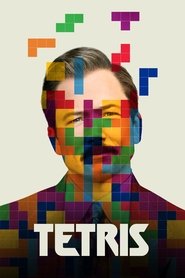
Tetris
In 1988, American video game salesman Henk Rogers discovers the video game Tetris. When he sets out to bring the game to the world, he enters a dangerous web of lies and corruption behind the Iron Curtain.
Jon S. Baird shoots the video game rights negotiation as a Cold War thriller. The blocks are not the point. The paperwork is the point.
Jon S. Baird constructs Tetris around the premise that the most exciting action movie of the year could be about licensing agreements. The protagonist is not a spy. He is a salesman who keeps getting into situations that require spy skills. At 7.7, this is a thriller about the difference between being right and being paid. The legal battle for Tetris took years and involved multiple governments. Baird shoots the boardroom scenes with the same tension that other directors bring to chase sequences. Taron Egerton plays the salesman as a man who is in over his head and knows it. The movie works because you are never sure whether he is going to win or just survive.
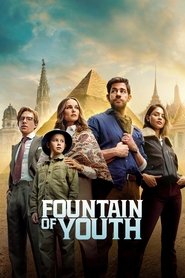
Fountain of Youth
A treasure-hunting mastermind assembles a team for a life-changing adventure. But to outwit and outrun threats at every turn, he'll need someone even smarter than he is: his estranged sister.
Guy Ritchie shoots the sibling rivalry as the real heist. The treasure is almost beside the point.
Guy Ritchie constructs Fountain of Youth around the premise that the most dangerous person in any operation is the one who knows you better than you know yourself. John Krasinski's treasure hunter has spent his career being the smartest person in the room. Natalie Portman's estranged sister has spent the same career watching him make that mistake. The adventure sequences are inventive and the locations are well chosen, but the movie works because the central dynamic never stops being interesting. At 6.3, this is not a perfect film. Ritchie's instinct for pacing occasionally gets ahead of the character work. But the interplay between the two leads carries every scene that the plotting cannot, and the third act earns its resolution because the movie has spent its runtime making you understand exactly what these two people cost each other.
Finch
On a post-apocalyptic Earth, a robot, built to protect the life of his dying creator's beloved dog, learns about life, love, friendship, and what it means to be human.
Miguel Sapochnik shoots the post apocalyptic road trip as a conversation between a dying man and a robot who is learning to be sad. The dog is watching both of them.
Miguel Sapochnik works in a register that most directors avoid because it requires patience. The movie spends most of its runtime in the cab of an RV. The action is minimal. The emotion is everything. At 7.8, this is a drama about the difference between building something and teaching it to care. Finch has built a robot to protect his dog after he is gone. The robot learns faster than Finch expected. The movie is about whether the robot can learn to love the dog the way Finch does, and whether the dog can learn to trust the robot the way it trusts Finch. The ending is quiet and the movie earns that quiet.
Argylle
When the plots of reclusive author Elly Conway's fictional espionage novels begin to mirror the covert actions of a real-life spy organization, quiet evenings at home become a thing of the past. Accompanied by her cat Alfie and Aidan, a cat-allergic spy, Elly races across the world to stay one step ahead of the killers as the line between Conway's fictional world and her real one begins to blur.
Matthew Vaughn shoots the novelist as a woman who has been writing her own life without knowing it. The plot twists are not twists. They are confirmations.
Matthew Vaughn constructs Argylle around the premise that the spy novel genre is a closed loop. The protagonist has been predicting the future because she has been writing the past. At 6.0, this is an action comedy about the difference between imagination and memory. Bryce Dallas Howard plays the novelist as a woman who has spent years constructing elaborate fantasies. The movie asks what happens when those fantasies turn out to be true. The action sequences are as over the top as Vaughn's other work. The third act reveals are satisfying because the movie has been setting them up since the opening scene.
Emancipation
Inspired by the gripping true story of a man who would do anything for his family - and for freedom. When Peter, an enslaved man, risks his life to escape and return to his family, he embarks on a perilous journey of love and endurance.
Antoine Fuqua shoots the escape as a survival procedural. Gordon does not have a plan. He has a direction and he keeps moving.
Antoine Fuqua constructs Emancipation around the premise that the most dramatic escape in American history was also a logistical nightmare. Gordon does not win through heroism. He wins through endurance. At 7.8, this is a drama about the difference between being free and being safe. The movie follows Gordon through swampland, tracking dogs, and the knowledge that turning back is not an option. Will Smith plays the role as a man who has decided that death is preferable to staying. The final image of his back, scarred from whipping, is the movie's thesis statement. Freedom has a cost and the scars are the receipt.

The Lost Bus
A determined father risks everything to rescue a dedicated teacher and her students from a raging wildfire.
Paul Greengrass shoots the ambush as a confusion of competing priorities. The driver is trying to protect the children. The authorities are trying to figure out who is responsible. Neither group has enough information.
Paul Greengrass constructs The Lost Bus around the same documentary style that defined his best thrillers. The camera shakes because the people holding it are also confused. At 7.0, this is a thriller about the difference between being a hero and being the person who happens to be there. The driver is not a trained operative. He is a man who made a choice and is now living with the consequences. Greengrass shoots the twelve hour standoff in real time. The tension comes from the gap between what the characters know and what they need to know. The ending is not triumphant. It is just the moment when the waiting stops.
Fly Me to the Moon
Sparks fly in all directions as marketing maven Kelly Jones, brought in to fix NASA's public image, wreaks havoc on Apollo 11 launch director Cole Davis' already difficult task of putting a man on the moon. When the White House deems the mission too important to fail, Jones is directed to stage a fake moon landing as backup, and the countdown truly begins.
Why watch: A movie that is genuinely funny rather than just marketed as one. Watch with people who appreciate wit over noise.
Comedy in this movie functions the way it is supposed to: as a delivery mechanism for truth. Greg Berlanti understands that the funniest moments are the ones that arrive from character rather than from setup, which is why the movie holds up beyond its initial release. Fly Me to the Moon works as a period piece and as a rom-com simultaneously, which is a harder technical achievement than it looks. The Apple TV+ catalogue is well served by it.
Palmer
After 12 years in prison, former high school football star Eddie Palmer returns home to put his life back together - and forms an unlikely bond with Sam, an outcast boy from a troubled home. But Eddie's past threatens to ruin his new life and family.
Fisher Stevens shoots the ex convict as a man who has spent twelve years in prison thinking about what he would do differently. The movie watches him try.
Fisher Stevens works in the space between what Palmer wants to be and what he has been. The movie does not pretend that prison fixed him. It just watches him try to build a life anyway. At 8.1, this is a drama about the difference between being forgiven and forgiving yourself. The boy next door is not a plot device. He is a mirror. Palmer sees himself in the kid and has to decide whether to intervene or stay quiet. Justin Timberlake plays the role as a man who is terrified of making the same mistakes again. The movie respects that terror by not offering easy redemption.
The Instigators
Rory and Cobby are unlikely partners thrown together for a heist. But when it goes awry, they team up with an unusual accomplice - Rory's therapist - to outrun police, backward bureaucrats, and a vengeful crime boss.
Why watch: A movie that is genuinely funny rather than just marketed as one. Watch with people who appreciate wit over noise.
Comedy in this movie functions the way it is supposed to: as a delivery mechanism for truth. Doug Liman understands that the funniest moments are the ones that arrive from character rather than from setup, which is why the movie holds up beyond its initial release. For the viewer who is tired of starting movies and abandoning them twenty minutes in. This one does not give you a reason to stop.
Cherry
Cherry drifts from college dropout to army medic in Iraq - anchored only by his one true love, Emily. But after returning from the war with PTSD, his life spirals into drugs and crime as he struggles to find his place in the world.
Joe Russo shoots the opioid addiction as a series of bad decisions that the protagonist keeps making because he has run out of better options. The movie does not judge him. It just watches.
Joe Russo constructs Cherry around the premise that the war in Iraq and the opioid epidemic are the same story told twice. The protagonist goes from soldier to addict without noticing the transition. At 7.3, this is a drama about the difference between being in pain and being able to treat it. Tom Holland plays the role as a man who keeps reaching for solutions that make everything worse. The movie does not offer a way out. It just documents the descent. The third act is bleak and the movie earns that bleakness by refusing to pretend that addiction is a redemption arc.

The Banker
In the 1960s, two entrepreneurs hatch an ingenious business plan to fight for housing integration - and equal access to the American Dream.
George Nolfi shoots the segregation era real estate scheme as a heist movie. The targets are banks. The tools are paperwork and white proxies.
George Nolfi constructs The Banker around the premise that the most effective way to fight a system is to learn how it works and then break it from inside. The protagonists do not protest. They buy buildings. At 7.6, this is a drama about the difference between being angry and being strategic. Anthony Mackie and Samuel L. Jackson play the entrepreneurs as men who have spent their careers studying the rules that were designed to exclude them. The movie watches them find the loopholes. The third act is not a courtroom victory. It is a confession that the system is rigged and they knew it when they started playing.

The Boy, the Mole, the Fox and the Horse
The unlikely friendship of a boy, a mole, a fox and a horse traveling together in the boy's search for home.
Peter Baynton shoots the journey home as a conversation about kindness. The animals are not metaphors. They are friends who happen to be animals.
Peter Baynton constructs The Boy, the Mole, the Fox and the Horse around the premise that the most profound statements about being human can be delivered in thirty five minutes by animated animals. The movie does not have a plot. It has a series of observations. At 8.2, this is a drama about the difference between being lost and being alone. The boy is both. The animals teach him that the two things are not the same. The animation style is simple and the voice performances are restrained. The movie earns its emotional weight by refusing to push. It just states the things it believes and trusts you to agree or disagree.
Spirited
Each Christmas Eve, the Ghost of Christmas Present selects one dark soul to be reformed by a visit from three spirits. But this season, he picked the wrong Scrooge. Clint Briggs turns the tables on his ghostly host until Present finds himself reexamining his own past, present and future.
Sean Anders shoots the Christmas Carol as a workplace comedy. The ghost has been doing this job for centuries. He is tired and the movie is about whether he can find a way to care again.
Sean Anders constructs Spirited around the premise that the redemption arc is not for the Scrooge. It is for the ghost. Will Ferrell plays the Ghost of Christmas Present as a man who has seen the same story play out thousands of times. The movie asks what happens when he meets a Scrooge who refuses to be redeemed. Ryan Reynolds plays the target as a man who has heard every argument and rejected all of them. The musical numbers are energetic and the comedy lands because the premise is genuinely novel. The third act is about whether the ghost can change, not whether the Scrooge can.

Blitz
In World War II London, nine-year-old George is evacuated to the countryside by his mother, Rita, to escape the bombings. Defiant and determined to return to his family, George embarks on an epic, perilous journey back home as Rita searches for him.
Steve McQueen shoots the evacuated boy as a child who does not understand why he has to leave. The movie follows him as he tries to get back home through a city that is being bombed.
Steve McQueen constructs Blitz around the premise that the Blitz was experienced by children who did not have the vocabulary to describe what they were seeing. The boy is not a hero. He is a kid who is scared and determined. At 6.0, this is a drama about the difference between being safe and being with the people you love. The mother's search runs parallel to the son's return. McQueen cuts between them without ever letting the audience forget that both are afraid. The rating reflects the uneven pacing, but the final scene is devastating because the movie has earned the reunion by making you doubt whether it would happen.
Apple TV+ is the only major platform that does not carry third-party advertising. The movies here are the movies Apple chose to put its name on.
Best Movies by Runtime -- What to Watch Based on How Much Time You Have
Runtime is one of the most useful filters when you are deciding what to watch and one of the least used. The platform homepage almost never sorts by length. This section does. All 142 movies currently on this page are sorted into three runtime buckets so you can match the movie to the actual time you have available tonight rather than starting something at 10pm that runs until 1am.
When you want a full movie but do not have all night.
Short movies on streaming are one of the most underused categories. A great movie under 90 minutes has been forced by its own runtime to cut everything that does not need to be there. The discipline that produces is almost always visible in the result. These are not truncated ideas or reduced ambitions. They are movies that said everything they needed to say and then stopped. That restraint is worth seeking out specifically.
The sweet spot. Long enough to develop, short enough to finish.
The 90 to 120 minute window is where most of the best movies in cinema history live. It is long enough to establish characters you care about, develop a story properly and deliver a resolution that feels earned. It is short enough that the decision to start a movie at 9pm is not a commitment that costs you a night of sleep. If you have no other criteria tonight, pick something from this list. The hit rate is consistently higher than any other runtime bracket.
Films that earn their runtime.
A movie over two hours is asking something of the viewer. The good ones repay that investment with a scope and depth that shorter movies cannot achieve. The bad ones simply waste your time at greater length. Every movie in this bucket was included in the 142 on this page specifically because it earned its runtime rather than simply filling it. If you are going to sit down for three hours, sit down for one of these.
Best Movies by Rating -- Streaming's Highest Rated Right Now
Rating alone does not make something worth watching but it is a useful filter when you have no other information. A movie with a 8.5 or above from a large enough sample of voters is almost certainly doing something right. The tiers below sort all 142 movies currently on this page by their TMDB score so you can find the highest-rated options across all five platforms without scrolling through every entry.
Best Movies on Disney+ Right Now (May 2026)
Disney+ carries the widest tonal range of any major streaming platform. Family animation, live-action blockbusters, Marvel universe movies, Star Wars entries and a growing slate of serious cinema from the Fox library all live here. The platform rewards exploration beyond the obvious franchise titles. There are genuinely great movies buried in the Disney+ catalogue that most subscribers have never found. This week the best movies on Disney+ include titles from several decades and several genres worth your time. The 30 movies below were selected to represent the full range of what the platform carries, not just the titles the homepage is currently promoting.
The Punisher: One Last Kill
As Frank Castle searches for meaning beyond revenge, an unexpected force pulls him back into the fight.
Reinaldo Marcus Green shoots the off grid Punisher as a man who has been trying to stop. The movie is about whether he can be pulled back in and what it will cost him to return.
Reinaldo Marcus Green constructs The Punisher: One Last Kill around the premise that Frank Castle has been living with the consequences of his violence for years. He is not looking for an excuse to start again. He is looking for a reason not to. At 8.5, this is a drama about the difference between revenge and justice. Frank has already gotten his revenge. The movie asks whether that was enough. The runtime is fifty one minutes and every minute earns its place. Jon Bernthal plays the character as a man who is exhausted by his own mythology. The final scene suggests that the violence will never stop, but Frank might stop wanting it.
Zootopia 2
After cracking the biggest case in Zootopia's history, rookie cops Judy Hopps and Nick Wilde find themselves on the twisting trail of a great mystery when Gary De'Snake arrives and turns the animal metropolis upside down. To crack the case, Judy and Nick must go undercover to unexpected new parts of town, where their growing partnership is tested like never before.
Jared Bush shoots the sequel as a road movie. Judy and Nick leave Zootopia for the first time and discover that the world outside is not ready for a predator prey partnership.
Jared Bush constructs Zootopia 2 around the premise that the harmony of the first movie was fragile and local. The rest of the world is still figuring it out. At 7.6, this is a comedy about the difference between being accepted in one place and being acceptable everywhere. Judy and Nick have to prove themselves to people who have never seen a bunny cop or a fox citizen. The animation is as detailed as the original and the jokes land because the characters have history. The third act is about whether the two of them can convince a skeptical audience that trust is possible.
The Avengers
When an unexpected enemy emerges and threatens global safety and security, Nick Fury, director of the international peacekeeping agency known as S.H.I.E.L.D., finds himself in need of a team to pull the world back from the brink of disaster. Spanning the globe, a daring recruitment effort begins!
Joss Whedon shoots the team assembly as a series of personality conflicts that eventually resolve into grudging respect. The alien invasion is almost incidental.
The Avengers works as well as it does because Whedon understood that the audience was there to watch Robert Downey Jr. and Chris Evans argue. The alien invasion is just an excuse to get them in the same room. At 8.0, this is an action movie about the difference between working together and trusting each other. The team spends most of the runtime learning to do the first. The final battle is about whether they have learned to do the second. Whedon shoots the action so that you can follow the strategy. The movie is still the high water mark for ensemble superhero cinema because it never forgets that the characters are the point.
Avatar
In the 22nd century, a paraplegic Marine is dispatched to the moon Pandora on a unique mission, but becomes torn between following orders and protecting an alien civilization.
Why watch: Action that actually has craft behind it. James Cameron understands that the best action sequences are the ones where you understand the geography and care about the outcome.
Avatar holds the all-time box office record for a reason that critics have consistently undervalued: Cameron engineered the spectacle so that the geography of Pandora is legible at every moment. The final battle works as action cinema — not just as an effects demonstration — because you always know where Sully is, where the RDA gunships are, where the Tree of Souls sits in relation to the action. The 7.6 reflects the film's limitations honestly: the screenplay is functional rather than inspired, the dialogue delivers the plot reliably rather than memorably. But as a directorial achievement in spatial storytelling at scale, it remains one of the most controlled pieces of blockbuster filmmaking in the catalogue. Watch it for the craft beneath the surface.
Avengers: Infinity War
As the Avengers and their allies have continued to protect the world from threats too large for any one hero to handle, a new danger has emerged from the cosmic shadows: Thanos. A despot of intergalactic infamy, his goal is to collect all six Infinity Stones, artifacts of unimaginable power, and use them to inflict his twisted will on all of reality. Everything the Avengers have fought for has led up to this moment - the fate of Earth and existence itself has never been more uncertain.
Joe Russo shoots Thanos as the protagonist. The Avengers are the obstacle. That inversion is the movie's entire thesis.
Avengers: Infinity War is a heist movie where the hero is the villain and the goal is the extinction of half of all life. The Russo brothers construct the narrative around Thanos's journey. The Avengers are trying to stop him, but the movie spends more time with him than with any of them. At 8.2, this is an action movie about the difference between being right and being inevitable. Thanos believes he is saving the universe. The movie does not argue with him. It just watches him succeed. The ending is the most audacious moment in franchise cinema because it refuses to provide hope. The snap happens and the movie ends.
Pirates of the Caribbean: The Curse of the Black Pearl
When wily pirate Captain Barbossa seizes Jack Sparrow’s beloved ship, the Black Pearl, and kidnaps the governor’s daughter, Elizabeth Swann, blacksmith Will Turner reluctantly teams up with the unpredictable pirate Jack to rescue her - only to uncover a terrifying curse that turns Barbossa’s crew into the undead.
Why watch: Action that actually has craft behind it. Gore Verbinski understands that the best action sequences are the ones where you understand the geography and care about the outcome.
Pirates of the Caribbean: The Curse of the Black Pearl is a theme park ride adaptation that became a genuinely good film because Verbinski understood that swashbuckler comedy requires physical commitment from the lead. Depp's Jack Sparrow is a performance built entirely out of specificity — the walk, the rum-slurred vowels, the way he enters every situation at a forty-five-degree angle to events — and it gives the film a centre of gravity that the action sequences can orbit without losing focus. The sword fights are choreographed with the old Hollywood logic: tell a story in the fight, not just a sequence of moves. At 7.8, this remains one of the most purely entertaining blockbusters in the Disney catalogue.
Spider-Man: No Way Home
Peter Parker is unmasked and no longer able to separate his normal life from the high-stakes of being a super-hero. When he asks for help from Doctor Strange the stakes become even more dangerous, forcing him to discover what it truly means to be Spider-Man.
Jon Watts shoots the multiverse as a consequence of Peter's refusal to accept loss. The movie is about whether he can learn to let go.
Spider-Man: No Way Home constructs its plot around the premise that Peter Parker's greatest flaw is his inability to accept that bad things happen to people he loves. The spell is a metaphor for denial. At 7.9, this is an action movie about the difference between saving someone and letting them go. The returning villains are not just nostalgia bait. They are the consequences of Peter's refusal to accept the original Spider Man movies' endings. The final scene is devastating because Peter finally learns the lesson that the previous Spider Men learned years ago: with great power comes the responsibility to accept loss.
Avengers: Endgame
After the devastating events of Avengers: Infinity War, the universe is in ruins due to the efforts of the Mad Titan, Thanos. With the help of remaining allies, the Avengers must assemble once more in order to undo Thanos' actions and restore order to the universe once and for all, no matter what consequences may be in store.
Anthony Russo shoots the time heist as a series of goodbyes. The plot is about getting the stones back. The movie is about saying farewell to the characters who made the franchise work.
Avengers: Endgame is three hours long and every minute is earned. The Russo brothers construct the narrative around the premise that the only way to undo the snap is to revisit the moments that defined the franchise. At 8.2, this is an action movie about the difference between winning and ending. The final battle is cathartic because the movie has spent its runtime reminding you why you care about these characters. The deaths are not surprises. They are conclusions. The movie earns its emotional weight by refusing to rush. The final scene with Captain America is the quietest moment in the franchise and also the most powerful.
Inside Out 2
Teenager Riley's mind headquarters is undergoing a sudden demolition to make room for something entirely unexpected: new Emotions! Joy, Sadness, Anger, Fear and Disgust, who’ve long been running a successful operation by all accounts, aren’t sure how to feel when Anxiety shows up. And it looks like she’s not alone.
Kelsey Mann shoots adolescence as a hostile takeover. The new emotions are not wrong. They are just in charge now and the old emotions do not know how to negotiate.
Kelsey Mann constructs Inside Out 2 around the premise that the emotional architecture of childhood does not scale to adolescence. Anxiety is not a villain. She is a response to a world that has become more complicated. At 7.5, this is a comedy about the difference between feeling something and being overwhelmed by it. Riley's headquarters gets a renovation that she did not ask for. The old emotions have to learn to share space with new ones. The movie is funnier than the original because the stakes are higher and the jokes land because the emotional logic is sound.
Deadpool & Wolverine
A listless Wade Wilson toils away in civilian life with his days as the morally flexible mercenary, Deadpool, behind him. But when his homeworld faces an existential threat, Wade must reluctantly suit-up again with an even more reluctant Wolverine.
Shawn Levy shoots the multiverse as a therapy session. Deadpool has been trying to get Wolverine to talk about his feelings for twenty years. The movie is about whether it finally works.
Shawn Levy constructs Deadpool and Wolverine around the premise that the only person who can get through to Wolverine is the one person who will not stop talking. Ryan Reynolds plays Deadpool as a man who has been waiting for this team up his entire career. Hugh Jackman plays Wolverine as a man who is tired of being asked to come back. At 7.6, this is an action comedy about the difference between being a hero and being a brand. The fourth wall breaks are frequent and the jokes are specific. The movie works because underneath the meta commentary there is a genuine respect for what these characters mean to the people who grew up with them.
Spider-Man: Homecoming
Following the events of Captain America: Civil War, Peter Parker, with the help of his mentor Tony Stark, tries to balance his life as an ordinary high school student in Queens, New York City, with fighting crime as his superhero alter ego Spider-Man as a new threat, the Vulture, emerges.
Jon Watts shoots the high school superhero as a kid who is not ready for the responsibility. The movie is about watching him fail and learn and fail again.
Spider-Man: Homecoming constructs its plot around the premise that Peter Parker is not Tony Stark. He is a teenager who keeps making teenager decisions. At 7.3, this is an action movie about the difference between wanting to be a hero and being ready to be one. Michael Keaton plays the Vulture as a villain with a credible grievance. The final fight is not about saving the world. It is about Peter proving to himself that he can handle a situation without calling for help. The movie works because it trusts its young cast to carry the emotional weight.
Iron Man 2
With the world now aware of his dual life as the armored superhero Iron Man, billionaire inventor Tony Stark faces pressure from the government, the press and the public to share his technology with the military. Unwilling to let go of his invention, Stark, with Pepper Potts and James 'Rhodey' Rhodes at his side, must forge new alliances – and confront powerful enemies.
Jon Favreau shoots the sequel as a hangover movie. Tony Stark is dealing with the consequences of announcing his identity. The movie is about whether he can survive his own ego.
Iron Man 2 suffers from sequel bloat but the core of the movie works. Favreau constructs the narrative around the premise that Tony Stark's greatest enemy is himself. At 6.9, this is an action movie about the difference between being a genius and being wise. The palladium poisoning is a metaphor for the cost of unchecked ambition. Mickey Rourke plays Whiplash as a villain who has a point. The final battle is messy but the character moments between Downey and Paltrow land because the actors have chemistry. The movie is uneven but the scenes that work are the ones where Tony is forced to confront his own limitations.
Moana 2
After receiving an unexpected call from her wayfinding ancestors, Moana journeys alongside Maui and a new crew to the far seas of Oceania and into dangerous, long-lost waters for an adventure unlike anything she's ever faced.
David G. Derrick Jr. shoots the sequel as an expedition movie. Moana is not just going on another adventure. She is leading a crew and the movie is about whether she can keep them alive.
Moana 2 constructs its plot around the premise that being a wayfinder is not the same as being a leader. Moana has to learn that her instincts are not always right and that the people following her have their own fears. At 7.0, this is an adventure comedy about the difference between being chosen and being responsible. The new crew members each have their own arcs. The animation is as beautiful as the original. The songs are not as memorable but the emotional beats land because the movie has done the work of establishing why Moana cares about getting home.
Spider-Man: Across the Spider-Verse
After reuniting with Gwen Stacy, Brooklyn’s full-time, friendly neighborhood Spider-Man is catapulted across the Multiverse, where he encounters the Spider Society, a team of Spider-People charged with protecting the Multiverse's very existence. But when the heroes clash on how to handle a new threat, Miles finds himself pitted against the other Spiders and must set out on his own to save those he loves most.
Kemp Powers shoots the multiverse as a bureaucracy. The Spider Society has rules and Miles is the first person to ask whether the rules are wrong.
Spider-Man: Across the Spider Verse expands the visual language of the original while asking a harder question: what happens when the canon demands that someone you love has to die? At 8.3, this is an action movie about the difference between accepting fate and fighting it. Oscar Isaac plays Miguel O'Hara as a man who has seen what happens when the rules are broken. Miles plays a teenager who refuses to accept that the rules are correct. The animation is even more ambitious than the first film. The cliffhanger ending is frustrating and earned because the movie has spent its runtime convincing you that Miles is right.
Spider-Man: Far From Home
Peter Parker and his friends go on a summer trip to Europe. However, they will hardly be able to rest - Peter will have to agree to help Nick Fury uncover the mystery of creatures that cause natural disasters and destruction throughout the continent.
Jon Watts shoots the European trip as a series of disasters that Peter keeps trying to hide from his friends. The movie is about whether he can be a normal teenager and a superhero at the same time. The answer is no.
Spider-Man: Far From Home constructs its plot around the premise that grief does not pause for a school trip. Peter is still processing Tony Stark's death and the movie is about whether he can find a way forward. At 7.4, this is an action movie about the difference between being a successor and being yourself. Jake Gyllenhaal plays Mysterio as a villain who is angry about being overlooked. The illusion sequences are the most visually inventive in the franchise. The mid credits scene is devastating because it forces Peter to confront the cost of trusting the wrong person.
WALL·E
After hundreds of years doing what he was built for, WALL•E - a robot designed to clean up the earth - discovers a new purpose in life when he meets a sleek search robot named EVE. EVE comes to realize that WALL•E has inadvertently stumbled upon the key to the planet's future, and races back to space to report to the humans. Meanwhile, WALL•E chases EVE across the galaxy and sets into motion one of the most imaginative adventures ever brought to the big screen.
Why watch: One of the highest-rated movies on the platform right now. WALL·E has earned its reputation and this is a good week to finally watch it.
WALL·E opens with nearly thirty minutes of almost no dialogue — a sustained bet that the audience will follow a small robot's emotional life through pure visual and sonic storytelling. Stanton wins that bet completely. The film's first act is as formally rigorous as silent cinema: WALL·E's loneliness is communicated entirely through object arrangement, screen scale, and sound design. When EVE arrives, the film shifts register and the shift is felt rather than explained. At 8.1, this is one of the rare family films where the ambition of the filmmaking is visible to every age in the room, reading differently but delivering something genuine to each of them.
Zootopia
Determined to prove herself, Officer Judy Hopps, the first bunny on Zootopia's police force, jumps at the chance to crack her first case - even if it means partnering with scam-artist fox Nick Wilde to solve the mystery.
Byron Howard shoots the police procedural as a metaphor for prejudice. Judy Hopps has to learn that being a victim of bias does not make her immune to holding biases herself.
Zootopia constructs its plot around the premise that the city is not a post racial utopia. It is a place where the old tensions have been papered over and the paper is starting to tear. At 7.8, this is a drama about the difference between being a good person and doing the work to be one. Judy's arc is not about defeating a villain. It is about discovering that she has been part of the problem. The movie is willing to make its protagonist uncomfortable and that willingness is why it holds up. The animation is detailed and the voice performances are strong. The message is not subtle but the execution is.
Iron Man
After being held captive in an Afghan cave, billionaire engineer Tony Stark creates a unique weaponized suit of armor to fight evil.
Why watch: Action that actually has craft behind it. Jon Favreau understands that the best action sequences are the ones where you understand the geography and care about the outcome.
Iron Man works so well as a foundation film because Favreau and Downey Jr. agreed that Tony Stark should be a genuinely difficult character to like, and then built the film's arc around earning the audience's investment rather than assuming it. The cave sequence — where Stark builds the first suit using weapons from his own company — is a piece of filmmaking built entirely on the logic that genius under pressure is watchable regardless of whether we're rooting for the person yet. By the time Stark emerges, we are. Favreau keeps the scale intimate for most of the runtime and the 7.7 reflects that discipline: this is a superhero film that understood restraint before the genre forgot what the word meant.
Inside Out
When 11-year-old Riley moves to a new city, her Emotions team up to help her through the transition. Joy, Fear, Anger, Disgust and Sadness work together, but when Joy and Sadness get lost, they must journey through unfamiliar places to get back home.
Why watch: Animation at the level where the craft alone is worth watching. This one rewards close attention to what is happening in every frame.
The 7.9 rating reflects consistent craft across multiple dimensions. A rating in this range typically signals craft that is distributed evenly across the movie rather than concentrated in one area propping up weaknesses elsewhere. Pete Docter has put together something that works as a whole. Animation at this level is not a genre for children's entertainment. It is a form that allows a filmmaker to control every visual element completely, and Pete Docter uses that control with intention. Every frame is a decision. Inside Out earns its emotion through conceptual rigour rather than sentiment. The film's structure mirrors what it is about, which is the rarest kind of formal intelligence in animation.
Big Hero 6
A special bond develops between plus-sized inflatable robot Baymax, and prodigy Hiro Hamada, who team up with a group of friends to form a band of high-tech heroes.
Chris Williams shoots the grief recovery as a superhero origin story. Hiro builds a suit to get revenge. Baymax teaches him that revenge is not the same as justice.
Big Hero 6 constructs its plot around the premise that the best way to deal with loss is not to avenge it but to honour it. Hiro's brother is gone and the movie is about whether Hiro can find a way to live with that absence. At 7.7, this is a drama about the difference between anger and purpose. Baymax is not a weapon. He is a healthcare companion and the movie never lets you forget that. The action sequences are fun but the emotional core is what makes the movie work. The final scene between Hiro and Baymax is quiet and earned.
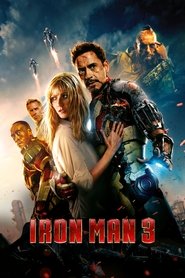
Iron Man 3
When Tony Stark's world is torn apart by a formidable terrorist called the Mandarin, he starts an odyssey of rebuilding and retribution.
Shane Black shoots the sequel as a deconstruction. Tony Stark loses everything and has to rebuild himself using only the tools that are available to a normal person.
Iron Man 3 constructs its plot around the premise that Tony Stark without his suit is still Tony Stark. Shane Black forces the character to rely on his wits rather than his technology. At 6.9, this is an action movie about the difference between being Iron Man and being Tony Stark. The Mandarin twist is controversial but it is consistent with the movie's thesis: the real enemy is not a terrorist with a title. It is the fear that Tony is not enough without the armour. The final battle is a collection of suits flying in formation. The movie's best scene is Tony talking a child through a panic attack in a diner.
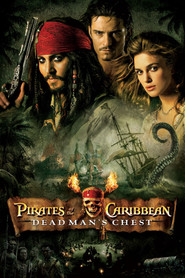
Pirates of the Caribbean: Dead Man's Chest
Captain Jack Sparrow’s got a blood debt to pay: he owes his soul to the legendary Davy Jones, ghastly Ruler of the Ocean Depths. To escape eternal servitude aboard the Flying Dutchman, ever-crafty Jack must track down the still-beating heart of Jones. But he won’t do it alone: Will Turner and Elizabeth Swann are drawn back into another one of his perilous quests - assuming they can evade execution for aiding a pirate.
Why watch: Action that actually has craft behind it. Gore Verbinski understands that the best action sequences are the ones where you understand the geography and care about the outcome.
Dead Man's Chest treats the blockbuster sequel as an opportunity to complicate rather than simply expand. Verbinski introduces Davy Jones and the Flying Dutchman not as plot obstacles but as a vision of what Sparrow could become — a man so afraid of death that he traded his humanity for permanence. The three-way sword fight on the mill wheel is one of the most technically inventive action sequences in blockbuster cinema, built around competing character motivations rather than choreography for its own sake. At 7.4 the plotting is deliberately incomplete and the runtime is baggy, but the directorial command in the set pieces is stronger than the first film. A sequel that respected its audience enough to raise the actual stakes.
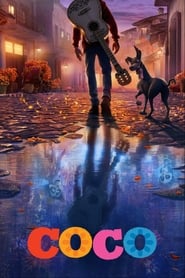
Coco
Despite his family’s baffling generations-old ban on music, Miguel dreams of becoming an accomplished musician like his idol, Ernesto de la Cruz. Desperate to prove his talent, Miguel finds himself in the stunning and colorful Land of the Dead following a mysterious chain of events. Along the way, he meets charming trickster Hector, and together, they set off on an extraordinary journey to unlock the real story behind Miguel's family history.
Lee Unkrich shoots the Land of the Dead as a place where memory is currency. The movie is about whether Miguel can convince his ancestors to remember the person he needs them to remember.
Coco constructs its plot around the premise that death is not the end. Being forgotten is the end. At 8.2, this is a drama about the difference between pursuing your dreams and honouring your family. Miguel's great great grandfather is a musician who abandoned his family. The movie asks whether he can be forgiven and whether that forgiveness matters to someone who is already dead. The final scene between Miguel and his grandmother is devastating because the movie has spent its runtime establishing the power of shared memory. The animation is beautiful and the songs are integrated into the plot rather than interrupting it.
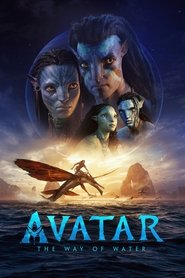
Avatar: The Way of Water
Set more than a decade after the events of the first movie, learn the story of the Sully family (Jake, Neytiri, and their kids), the trouble that follows them, the lengths they go to keep each other safe, the battles they fight to stay alive, and the tragedies they endure.
James Cameron shoots the ocean as a character. The Sully family has to learn the rules of a new environment while being hunted by an enemy who knows the old rules better than they do.
Avatar: The Way of Water constructs its plot around the premise that the first movie was about learning to trust a new world. The sequel is about learning that the skills you learned might not work in a different one. At 7.6, this is an action movie about the difference between being a warrior and being a parent. Jake Sully has spent years defending the forest. The ocean requires different strategies. Cameron shoots the underwater sequences with the same clarity that he brought to the jungle. The runtime is long but the pacing is disciplined. The final battle is the most ambitious action sequence of the year.
The Fantastic 4: First Steps
Against the vibrant backdrop of a 1960s-inspired, retro-futuristic world, Marvel's First Family is forced to balance their roles as heroes with the strength of their family bond, while defending Earth from a ravenous space god called Galactus and his enigmatic Herald, Silver Surfer.
Matt Shakman shoots the 1960s setting as a statement of intent. The Fantastic Four are not just another superhero team. They are the first family of the Marvel Universe and the movie treats them that way.
The Fantastic 4: First Steps constructs its plot around the premise that the best way to introduce a reboot is to treat the characters as celebrities who have already been operating for years. The movie does not waste time on another origin story. It assumes you know who they are and focuses on what they do. At 7.0, this is an action movie about the difference between being a family and being a team. The Four argue and make up and argue again. Galactus is a threat that requires all of them to work together. The 1960s aesthetic is consistent and the casting is strong. The movie is not revolutionary but it is solid and the ending suggests a sequel that could be better.

Freakier Friday
Years after Tess and Anna endured an identity crisis, Anna now has a daughter of her own and a soon-to-be stepdaughter. As they navigate the myriad challenges that come when two families merge, Tess and Anna discover lightning might indeed strike twice.
Nisha Ganatra shoots the body swap as a family therapy session. Four people are in the wrong bodies and they have to learn to ask for what they need instead of hoping someone will guess.
Freakier Friday constructs its plot around the premise that the original movie was about a mother and daughter learning to understand each other. The sequel expands the premise to include multiple family members. At 6.8, this is a comedy about the difference between being heard and being understood. The body swap premise is an excuse for characters to say things they would never say in their own bodies. Lindsay Lohan and Jamie Lee Curtis have aged into their roles and the movie lets them play older versions of the characters they originated. The third act is predictable but the journey is fun and the cast commits to the material.
Disney+ carries content rated up to PG-13 within the main platform. Some Fox catalogue titles with higher ratings are accessible via the Star content hub where available.
Hidden Gems Worth Finding This Week
Every week a small number of movies sit below the top popularity rankings but deliver something that the more visible titles on each platform do not. These are the movies that the algorithm underweights because they lack franchise recognition or recent press coverage. They are not hidden because they are obscure. They are hidden because the platform surfaces the loudest options first and these movies are quieter. They reward the viewer who is willing to look past the first screen. The entries below scored between 6.5 and 7.4 on TMDB from a meaningful voter base, which places them precisely in the range where quality outpaces visibility.
Frequently Asked Questions About Streaming Movies Right Now
What are the best movies on Netflix right now?
The best movies on Netflix right now are the 30 titles listed in the Netflix section of this page, verified against TMDB popularity and editorial quality. This list is refreshed every week so the selections stay current and relevant. Netflix carries the largest volume of any platform on this page, which means the strongest 30 movies represent real quality rather than just what happened to get made recently.
What are the best movies on Amazon Prime right now?
The best movies on Amazon Prime right now include a wide range of genres from thriller and drama to action and international cinema. The 30 movies in the Amazon Prime section of this page are the platform's strongest offerings this week. Prime Video has quietly built one of the deepest catalogues in streaming and the best movies here reward a viewer who is willing to look past the homepage recommendations.
What is the best movie to watch tonight?
The best movie to watch tonight depends on your mood. If you want something fast and tense, look at the top entries in the Netflix or HBO Max sections. If you want something more thoughtful, the Apple TV+ or Amazon Prime picks tend toward movies with more depth and ambition. If you have limited time, the runtime section of this page breaks all 142 movies into three buckets based on how long they run, so you can match the movie to the time you actually have.
How often is this list updated?
This page is updated every Monday. The movie data is pulled fresh from the TMDB API at the start of each week, so the titles and ratings reflect what is actually popular and available right now rather than a cached list from months ago. The editorial notes are reviewed with each refresh to account for any movies that have dropped in availability or shifted in critical perception since the previous week.
What are the best new movies streaming right now in May 2026?
The best new movies streaming in May 2026 are distributed across all five major platforms covered on this page. Netflix, Amazon Prime, HBO Max, Apple TV+ and Disney+ all carry strong recent additions this month. The full breakdown is in the platform sections above. Movies are ranked within each platform section by a combination of current popularity and editorial quality rating, so the strongest recent additions naturally rise to the top.
Where can I find the best hidden gem movies streaming right now?
The Hidden Gems section of this page specifically pulls movies that rank slightly lower in mainstream popularity but deliver something that the more visible titles on each platform do not. These are the streaming picks that rarely appear in algorithm recommendations but consistently reward the viewers who find them. Look specifically at the movies rated between 7.0 and 7.5 in the platform sections above. That range consistently produces the most underappreciated movies currently streaming.
Is it worth subscribing to all five major streaming platforms?
Subscribing to all five platforms simultaneously costs more than most people want to spend. The more practical approach is to rotate subscriptions based on what is available now. This page makes that decision easier by showing what is genuinely worth watching on each platform this week. If you can only keep two subscriptions at once, the current catalogue strength visible in the platform sections above should help you decide which two those should be this month.
What streaming platform has the best movies right now?
Based on current catalogue strength, all five platforms carry genuinely good movies this week. Netflix leads on volume. Apple TV+ leads on curation quality per title. HBO Max leads on prestige and artistic ambition. Amazon Prime leads on catalogue depth and breadth across genres. Disney+ leads on franchise and family content. The platform that is best for you depends on what you are looking for tonight specifically.
How is this list different from other best streaming movies lists?
Most streaming recommendation pages are static lists that were written once and never updated. This page is rebuilt every Monday using live TMDB data. The editorial notes are written to give you a real sense of whether a movie is worth your time rather than a plot summary copied from a press release. Each entry includes a specific editorial tip, a deeper analysis paragraph and a sentence explaining precisely why that movie earned its place on this week's list over the alternatives.
Do you cover streaming movies outside the US?
Platform availability varies significantly by country. This page covers US availability specifically. For international availability, JustWatch is the most reliable tool to check what is streaming in your country right now. The movie quality assessments and editorial notes on this page apply regardless of where you are watching from, even if the specific platform availability differs.
What are the best movies on HBO Max right now?
The best movies on HBO Max right now are the 30 titles listed in the HBO Max section of this page. HBO Max carries the legacy of decades of Warner Bros and prestige cable programming, which gives its movie catalogue a coherence that other platforms lack. The strongest picks this week lean toward drama, thriller and formally ambitious cinema that rewards close attention. Check the HBO Max section above for the full list with ratings, directors and editorial notes on each movie.
What are the best movies on Apple TV+ right now?
The best movies on Apple TV+ right now are listed in full in the Apple TV+ section of this page. Apple TV+ is the most deliberately curated platform in streaming. Every movie on the service went through an acquisition or development process that prioritised craft over commercial safety. The 30 movies listed this week reflect that philosophy. The platform's library is smaller than its competitors but the hit rate per title is notably higher.
What are the best movies on Disney+ right now?
The best movies on Disney+ right now span a wider tonal and genre range than the platform's family-friendly reputation might suggest. The Disney+ section of this page includes movies from the Fox library, Marvel catalogue, Pixar back catalogue and original Disney productions across multiple decades. The 30 movies listed this week include options for every age group and every mood, from genuinely great animation to serious drama that happens to live in the same library as the animated classics.
What is the highest rated movie streaming right now?
The highest rated movies currently streaming are listed in the ratings section of this page, which breaks all 142 movies into three tiers: 8.5 and above, 7.5 to 8.4, and 7.0 to 7.4. Movies in the 8.5 and above tier are exceptional by any measure and represent the kind of viewing experience that justifies whatever subscription you are paying for. The ratings section also provides brief editorial notes on why a high rating in this context actually means something.
What are the best thriller movies streaming right now?
The best thriller movies streaming right now are distributed across all five platforms covered on this page. Thriller is consistently the strongest genre in streaming because the format rewards the kind of sustained tension that works well on a home screen. Look specifically at the genre tags on each movie entry in the platform sections above. Movies tagged Thriller or Crime Thriller in particular are the most reliable category this week for a viewing experience that holds from first scene to last.
What are the best drama movies streaming right now?
The best drama movies streaming right now include some of the finest movies currently available on any platform. Drama is the broadest category in cinema and also the one with the widest quality range. The movies tagged Drama in the platform sections above were selected specifically for emotional intelligence and directorial control. These are not the kind of dramas that earn their emotional moments through manufactured sentiment. They earn them through observation and precision. The Amazon Prime and HBO Max sections carry the highest concentration of strong drama this week.
What are the best action movies streaming right now?
The best action movies streaming right now are listed across all five platform sections on this page. Not all action is equal. The action movies on this list were selected for craft as much as scale: movies where the director understands geography, where the stakes feel real, and where the action sequences serve a story rather than replacing one. Netflix and Disney+ carry the strongest action titles this week in terms of production scale, while Amazon Prime and HBO Max carry the action movies with more formal ambition behind them.
What are the best horror movies streaming right now?
The best horror movies streaming right now are scattered through the platform sections above, identifiable by their Horror or Thriller genre tags. Horror that earns its scares through atmosphere and character rather than manufactured shocks is consistently the best version of the genre and it is the version prioritised in the selections on this page. HBO Max has historically carried the most formally interesting horror in its catalogue. Netflix tends toward higher-volume horror with a wider range of quality.
What are the best sci-fi movies streaming right now?
The best science fiction movies streaming right now include movies that use the genre to say something as well as movies that simply use it to look impressive. Both have value but they deliver different things. The sci-fi movies on this page are tagged in their genre lines and the editorial notes distinguish between the two types. If you want science fiction with genuine ideas in it, look at the movies with directors who have a track record in the genre. If you want spectacular science fiction that works primarily as an experience, Disney+ and Netflix carry the strongest options this week.
What are the best comedy movies streaming right now?
The best comedy movies streaming right now are the hardest category to pin down because comedy dates faster than any other genre and platform algorithms tend to surface the most recent comedies regardless of quality. The comedies on this list were selected for timing, wit and a sense that the movie was made by people who understood what was actually funny rather than what had been focus-grouped to seem funny. A genuine comedy that holds up beyond the moment of its release is one of the rarest and most rewarding things currently available on streaming.
What are the best short movies streaming right now, under 90 minutes?
The best short movies streaming right now are listed in the runtime section of this page under the under 90 minutes category. Short movies on streaming are undervalued. A great 80-minute movie delivers a complete experience without the commitment of a two-hour drama and the best of them are as fully realised as anything longer. The runtime section on this page identifies all movies from the current 142 that fall under 90 minutes, with notes on which are the strongest picks in that category this week.
What are the best classic movies streaming right now?
The best classic movies streaming right now are the movies in the platform sections above with release years before 2000. Catalogue classics are one of streaming's great underused resources. Most people use streaming to watch recent releases and miss the extraordinary depth of older movies sitting in the same library. The movies from before 2000 on this page were flagged in their editorial analysis sections as catalogue titles worth rediscovering, with notes on why they hold up and what makes them worth the time of a viewer who might not have seen them before.
Is Netflix or Amazon Prime better for movies right now?
Netflix and Amazon Prime are the two largest movie catalogues in streaming and comparing them directly depends entirely on what you are looking for. Netflix leads on recent acquisitions and volume of titles in the thriller and action categories. Amazon Prime leads on international cinema, catalogue depth and the kind of prestige drama that does not make a lot of noise at release but rewards the viewer who finds it. Both platforms carry strong movies this week. The platform sections above give you a direct comparison of the 30 best movies on each service right now.
What should I watch on streaming if I only have 2 hours?
If you have two hours, the 90 to 120 minute bucket in the runtime section of this page is built for exactly that situation. Movies in that range are long enough to develop properly and short enough to finish without feeling like a commitment. The runtime section lists all current movies in that window with their platform, rating and a brief note. For most viewing situations that runtime bracket produces the most satisfying movies because directors working in that range have to be disciplined and disciplined filmmaking almost always produces better results.
How do I find movies on streaming without using the algorithm?
The algorithm on every major streaming platform is built to maximise the time you spend on that platform rather than to recommend the movie that is actually best for you tonight. The most reliable alternative is a site like Moviepiq that indexes movies by mood, feeling and specific editorial criteria rather than popularity metrics. The mood-based approach at moviepiq.com starts from what you actually want from a movie tonight rather than what is trending, and it consistently produces recommendations that the algorithm would never surface.
This page is rebuilt every Monday. The movie data comes directly from TMDB and reflects current platform availability in the United States. Platform libraries shift regularly and a title that is available this week may have rotated off by next week. If a specific movie is no longer available on the platform listed, JustWatch will show you where it has moved.
The five platforms covered here -- Netflix, Amazon Prime, HBO Max, Apple TV+ and Disney+ -- represent the movies that the largest number of people in the US can access tonight without an additional rental fee. The goal is always to answer the question that most people are actually asking on a Sunday evening: what is the best thing I can watch right now, with what I already have, without spending an hour deciding.
Updated: May 2026. Next update: the following Monday at 6am UTC.