MOVIES WHERE THE SECOND WATCH CHANGES EVERYTHING
These films are not confusing for its own sake. Each one is built so that the first watch gives you an experience and the second gives you the architecture underneath it. The payoff is not a trick: it is the full picture.
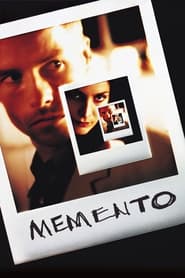
MEMENTO
The first time you watch Memento, you are disoriented by design. The reverse chronology puts you inside Leonard's condition: perpetually confused, perpetually piecing things together from fragments. It works as an experience precisely because it withholds.
The second watch is a completely different movie. You already know what Leonard does not know about himself. Every scene carries a weight it could not carry on first viewing. The lies he tells himself become visible. The tragedy lands harder.
Watch it forward on the second viewing. Some editions offer a chronological cut, but even rewatching in the original order, knowing the endpoint, reveals a different movie entirely.
VIEW ON MOVIEPIQ →
ANNIHILATION
On first watch, Annihilation feels like a beautiful, unresolved nightmare. The Shimmer does not explain itself, the ending refuses to resolve cleanly, and the movie leaves you unsettled in a way that is hard to articulate. This is the intended first experience.
Return with the knowledge of what the Shimmer does to memory and identity, and the movie becomes a precise study in transformation and self-destruction. Lena was never simply going in to save Kane. Every detail of her home life takes on new meaning once you understand what she is really doing there.
Pay attention to the opening interrogation scene on the second watch. It tells you more than you could absorb the first time.
VIEW ON MOVIEPIQ →
MULHOLLAND DRIVE
Lynch's masterwork splits cleanly into two halves that seem to contradict each other until they do not. The first viewing is a gorgeous fever dream that refuses to cohere. Most viewers spend it waiting for a logic that never arrives in the expected form.
On the second watch, the first half reads as wish fulfillment: a fantasy constructed in precise detail to invert a painful reality. Every element that seemed random reveals its function. The blue box is not a mystery; it is a door. And once you know what it opens onto, the whole movie breaks your heart.
Read nothing beforehand. Let the first watch be purely experiential. The second watch is where the meaning lives.
VIEW ON MOVIEPIQ →
HEREDITARY
Hereditary presents itself as a grief movie. That reading is not wrong, but it is incomplete. The first watch is dominated by the family's disintegration and the horror of what keeps happening to them. The cult mechanics sit in the background, visible but not prioritized.
On the second watch, the cult is everywhere from the opening frame. Figures in corners. Symbols in rooms. Gestures repeated across characters. The movie was never about a family falling apart. It was about a family being deliberately taken apart. Knowing this does not diminish the horror; it deepens it.
Watch the backgrounds. The figures you missed the first time were always there.
VIEW ON MOVIEPIQ →The first watch gives you an experience. The second gives you the architecture underneath it.
MOVIES WHERE REWATCHING REVEALS A DIFFERENT PROTAGONIST
Some films shift their moral center on a second viewing. The character you trusted is not who you thought. The character you dismissed was the one paying attention.
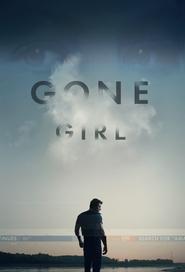
GONE GIRL
The first half of Gone Girl is built to make you read Amy as a victim and Nick as guilty. Fincher and Flynn construct this reading carefully, down to the color grading and where the camera lingers. Most first-time viewers fall for it completely.
The second watch is a masterclass in misdirection. Amy's reliability as a narrator collapses in plain sight once you know the shape of the deception. Every scene she controls takes on a different quality. The cool, calculated intelligence that felt like victimhood in the first viewing reads as something far colder.
Watch Nick's expressions during Amy's voiceover scenes. He knows something is wrong but cannot name it. On rewatch, you can see exactly what he is picking up on.
VIEW ON MOVIEPIQ →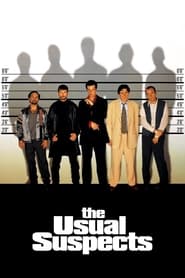
THE USUAL SUSPECTS
The Usual Suspects built an entire genre of twist endings on the back of its final scene. The first watch ends with a revelation that reframes everything you just saw. It is enormously satisfying, and for many viewers the movie becomes a trophy: a puzzle they solved.
What the second watch reveals is more interesting than the twist itself. Verbal's performance is a work of improvised brilliance played in real time, constructed from objects in the room. Watching him do it, knowing what he is doing, is far more entertaining than being fooled by it.
Keep an eye on the bulletin board behind the detective during Verbal's interrogation. The screenplay is almost literally in the room.
VIEW ON MOVIEPIQ →
ARRIVAL
Arrival's emotional gut punch depends on the audience sharing Louise's temporal confusion. The first watch positions the personal scenes as backstory, grounding the alien contact plot in human loss. The structure feels linear until it does not.
Return knowing that Louise already understands the heptapod language during every scene you are watching, and the movie becomes about the conscious choice to live through grief rather than avoid it. That is a more demanding idea than most sci-fi entertains, and it only becomes fully visible on the second pass.
The movie tells you its secret early. You just do not have the language to read it yet.
VIEW ON MOVIEPIQ →
FIGHT CLUB
Fight Club's twist is among the most discussed in cinema, which means a significant portion of viewers arrive already knowing it. For them, the first watch is already the second watch in terms of perspective. For everyone else, the rewatch is the real experience.
On second viewing, every scene between the Narrator and Tyler is a man talking to himself. Every interaction has a different texture. The physical comedy lands differently. The tragedy is clearer. And Fincher's decision to hide Tyler in single frames of the movie early on stops being an Easter egg and starts being a direct statement about what is happening.
Watch for Tyler appearing in single frames before his official introduction. Fincher planted him deliberately.
VIEW ON MOVIEPIQ →The character you trusted is not who you thought. The character you dismissed was the one paying attention.
MOVIES THAT ONLY MAKE SENSE THE SECOND TIME
Not every movie on this list is deliberately withholding. Some are simply too dense or too structurally complex to absorb in one sitting. The second watch is not a reward for patience; it is a requirement for comprehension.
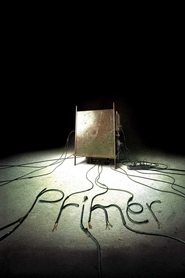
PRIMER
Primer does not explain itself. It drops you into two engineers talking in technical language about something that gradually reveals itself as time travel, but the movie never pauses to orient the viewer. The first watch is genuinely bewildering for almost everyone.
The second watch, with a timeline in hand if necessary, reveals a movie of extraordinary precision. Every conversation is exactly what it claims to be. The paradoxes are not plot holes; they are load-bearing walls. Primer rewards obsessive rewatching because it was built by someone who cared more about accuracy than accessibility.
Timeline diagrams are freely available online. Using one does not spoil the movie; it opens it up.
VIEW ON MOVIEPIQ →
SYNECDOCHE, NEW YORK
Kaufman's directorial debut is the most honest movie ever made about mortality, and it is also genuinely difficult. The first watch is often experienced as overwhelming: too much happening, too many threads, too many time jumps. This is not a failure of comprehension. This is the movie working as intended.
The second watch reveals a ruthlessly organized logic beneath the accumulation. The play within the play within the movie is a precise diagram of how we construct meaning from our own lives. The ending, which seems arbitrary on first viewing, becomes devastating once you understand what Caden was always trying to build.
The scale of the warehouse set and the play inside it grows at the same rate as Caden's failure to live his actual life. This becomes visible on rewatch.
VIEW ON MOVIEPIQ →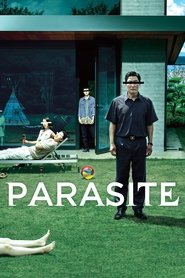
PARASITE
Parasite operates as a heist comedy for its first half, and the pleasure of the first watch is enormous: clever, fast, funny, tightly constructed. The tonal shift, when it comes, is one of cinema's great gear changes. Most viewers are not prepared for it.
The second watch reveals Bong's architectural precision. Every early joke has a later counterpart in horror. Every object that seems like a prop is a load-bearing symbol. The stone, the stairs, the smell: all of it is there from the beginning. The movie is not being withholding. It is being patient.
Notice how the Park family never goes downstairs. Then notice what that means once you know what is downstairs.
VIEW ON MOVIEPIQ →The films on this list share one quality: they take the viewer's first experience seriously enough to build something underneath it. The twist, the reveal, the structural trick is never the point. It is the mechanism that earns the second watch.
The best of them change not just what you understand but how you feel about what you already saw. That is a rarer achievement than it sounds.
- Memento (2000) Start here. Establishes the idea that what you see depends entirely on what you know.
- Arrival (2016) A gentler entry into non-linear structure, with emotional stakes that land harder on rewatch.
- Gone Girl (2014) The unreliable narrator taken to its most controlled extreme. Watch it back to back for full effect.
- Hereditary (2018) Midmarathon horror. The cult mechanics are invisible on first watch and inescapable on second.
- Parasite (2019) The architecture of the script becomes visible only once you know the ending.
- Mulholland Drive (2001) End here. Lynch's movie needs everything the earlier films taught you about reading backward.